Koyasan, Monastries, Shrines and Monks

So today we were heading off to Koyasan, the  Holy mountain, another World heritage site. This involved several trains, subways and even a funicular  as well as a bus! Having sent our main luggage onto Tokyo, we were travelling fairly lightly.We journeyed on a Bullet train and a private railway ( the Nankai railways express). On arrival at Gokuraku-bashi we changed to the Nankai Funicular to Mount Koya.

Mount Koya, or Koyasan, is a mountain retreat, with 117 Temples and 200,000 shrines/tombs. These tombs/shrines are for people of all classes and have been built among the cedars of Mount Koya, many of which are obviously visited as they are either drapped in clothes or flowers.

The whole of Koya-san is dedicated to temples and shrines and the monasteries act as the local B and B. We stayed in the SEKISHO-IN,  ( 60 rooms) which actually can be booked on Booking.com and is mentioned on Trip advisor, so not as remote as one is given to believe. Guests can experience staying in a historic Buddhist temple all of the  rooms are Japanese-style with Tatami straw floors and futon bedding, yukata robes are also provided and no shoes are allowed. We were lucky to have rooms with private bathrooms and wi-fi whereas the rooms in the main wing had shared facilities. Meals, which were vegetarian, were to be taken in the main dining room and guests were encouraged to take part in the prayer session held at 6.30 every morning.

We checked in and then promptly went for a walk through the cedars ( Okunoin), amazed by the sheer number of tombs, until we came to the mausoleum of Kobo Daishi ( the founder of a monastic center here 1,200 years ago). Visitors are allowed, but photography is not. We returned to the temple in time for dinner ( 5.30) and we were shown a small private dining room. Dinner, was as I said vegetarian and was beautifully served in traditional lacquerware.

We had the foresight to buy and transport with us a 1.8 Litre of sake, suspecting that it would be a “dry” evening otherwise.Thankfully, our rooms had a heater and a kind of electric blanket, drapped over a table and also a couple of chairs, so we all congregated, feet under the electric blanket, heater blasting and drinking Sake. It was only the next day we saw the notice saying ” no food or drink in room!” We woke up the following morning only to find that the temperature had dropped overnight to minus!! Thank goodness for heated japanese toilet seats!  We could have stayed there all day! Breakfast ( after going to the morning prayers, where there was a lot of chanting,) was an affair, better not remembered, more miso soup, and more Tofu and rice I suspect, though as I say, better not remembered. Two of our midst had the foresight to bring some pastries with them from the previous hotel.

After breakfast we inspected the rest of the village, which was extremely beautiful, well-kept and some lovely very old buildings, more zen gardens and cherry blossoms. Even the local shop was selling sweetmeats, made with rice and red bean paste to resemble cherry blossoms.

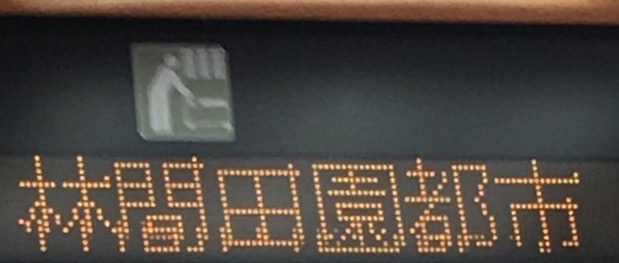
And so we were to make our way back to Tokyo, and this too was an adventure. On a last note, I photographed this sign, which is in Chinese Characters. I found it interesting. Do you know what it says ( well at least the first part).ks15


Golden Temples, Royal Palaces, 1,000 Buddhas and some shopping!

Today, we saw a golden Temple, more cherry blossom, a Royal Palace,  a 1000 Buddhas and an antique shop, along with the Kyoto handicraft centre.

We took a tour, not my favourite occupation but it is the most efficient when you have so little time in such a lovely city. Our tour guide spoke passable English but , and this I assume is what they learn in Tour guiding school, they repeat and repeat and repeat, which gets to be a bit tedious after a while. Still moving swiftly along,  we went to the “Temple of the Golden Pavilion” or the Kinkaku-Ji Temple. It is probably one of the most recognisable images of Kyoto. The temple is set on th edge of a small lake, which reflects the beautiful temple. It was originally built for Shogun Ashikaga Yoshimitsu (1358-1408) but was converted to a Zen temple shortly after his death. It is covered in gold leaf, which comes from Kanazawa. The park in which the temple sits is particularly pretty and has some interesting bamboo structures to support many of the trees.

Then we were very lucky to be able to go into the grounds of the Royal Palace, not normally open on a Sunday, and in fact not open very often at all. This year open to the public  from the 6th to the 10th April and the ancient game of football (Kemari) of the Imperial  court on to be played on the 10th. So we were very lucky indeed.

Kemari was first played in Japan around 600AD, it is a non competitive ball game and the idea is to keep the ball in the air, using any part of the body. the clothes or uniform come from the Asuka era ( 600 Ad) including the hat. Apparently George H.W. Bush played it on his visits to Japan! Nowadays it is only played as a demonstration game and at festivals.

Then it was a quick visit to the Handicraft centre, read souvenir shopping, some of it was good examples of local handicraft, fine embroideries, ancient silk kimonos reworked into ties and scarves and some of it typical souvenir type of goods.  Himself continued onwards to see the 1,000 buddhas, which he said was impressive but No photography. Shame really.

Me, I absconded and visited an antiques shop where I bought a lacquerware and gold leaf box, which I was told was used at christmas, and the cook would place all sorts of special foods in each compartment.

From there I went to a Department store, which was just beautiful it puts Harrods to shame, everything was beautifully presented  and well laid out. The food hall was just amazing and HUGE. I could have spent all day there. I managed to buy a few items whilst there, one being a japanese omelette pan, which I have yet to use, but firstly I need to learn how to do it, Not as easy as one might think.

Tomorrow we will head out for a real adventure, but not before I visit a local market.

Dinner in a Pub, Japanese style!

On our second evening in Kyoto, after a day of looking at beautiful Geishas, Bamboo Forests and Zen Rock gardens, we were taken to the equivalent of a pub.The EBISUGAWA ENRAKU down the back streets of Kyoto was very casual, and similar to a previous dining experience, we were all seated along a bar. Here for the first time since arriving in Japan, we had to order our own dinner. What consternation? Well it was until someone produced a menu in English.

The chefs here, were younger than most of the ones that we had encountered previously, but were still as diligent, especially when it came to carving food items  into cherry blossom petals. At this time of year it is all and everything to do with Cherry blossom.

I think we all chose the boneless chicken, which was fine without being anything amazing. Several of us chose the Shrimp Tempura, and the vegetable tempura, but as everything was cooked to order, obviously it do not all arrive at the same time and so ende up being a bit of a scrum, to see who could ge to the Tempura first, was a close contest, between those who, had had their fill of raw fish and those who really liked the Tempura! The Korean Pancake was equally good as was the Spring Salad, which as the name suggests is only made in the spring with seasonal vegetables. One thing we had noticed on our travels was a lack of fresh fruit and vegetables, a lot of pickles but vegetables seemed to be restricted to a garnish, so this salad was a welcome change.

There were also some pregnant fish ( small fish of the whitebait variety) along with their roe and some sashimi, this was followed as always with a Japanese meal by rice and this time it was rice with tuna and spring onions.On the countertop were also some fried fish heads and some rather large pieces of octopus,we gave both of them a miss.

So day three in Kyoto is looming, we are going on a tour of famous sights and with luck we will see the Royal Palace, but is not open to th epublic very oftern and never on a Sunday, we shall wait and see !

Tea ceremony, Geisha, Bamboo forests, and zen gardens

For our first free day in Kyoto, we were ushered along ( and I say ushered as, our Japanese friend was taking no chances that we would abscond, or worse still get lost) to the 144th MIYAKO ODORI. This is an annual event, taking place during the month of April. It is forever popular and sells out months in advance, so you understand, why we were being chaperoned.

Miyako Odori,  is almost the debutants coming out for the apprentice geisha ( the Maiko).  Young girls are apprenticed to be Geishas, in Geisha houses, and their training lasts for many years. The house looks after the girls, feeds and clothes and trains them and in return they will have to work for the house to repay her debt. Contrary to popular belief geisha are not prostitutes, though they might have been in former times. Kyoto is famous for its Geisha. During the Miyako Odori, the girls/women perform several show a day, which will include also a tea ceremony. They are famous for their skills in traditional Japanese arts, dance and music. They are resplendent in their beautiful Kimonos, which are all custom made, their hair and makeup are lavish and beautiful. The Miyako Odori, consists of 8 scenes, including the four seasons. There is music on both sides of the stage and in the finale there are 60 dancers on the stage at once. Unfortunately, photography was banned so no photographs, here then.

After a morning, watching beautiful geisha and their apprentices, we took a couple of local trains ( along with half of Kyoto) to a suburb called Arashiyama. A pretty suburb enhanced by the cherry trees in full bloom , and the “Bridge to the Moon” which led the visitors over the river to the trees. On turning round and weaving past a couple of temples, we came upon the famous bamboo forest, and indeed a forest it is.  Hansel and Gretel would certainly have to mark their tracks in this, as it is very dense indeed.

After this saunter in the country we headed off to THE STONE GARDEN, when people in Japan refer to Stone gardens, Rock Gardens, or Zen gardens, then this is the one.

This garden is to be found at the RYOANJI Temple. A zen garden is usually relatively small, surrounded by a wall, and is usually meant to be seen while seated from a single viewpoint outside the garden, such as a porch or veranda. The garden here only measures 25 m from east to west. Very different from gorgeous gardens of European Palaces. No trees are to be seen and only 15 rocks and white gravel are used. The walls are made of clay boiled in oil and some of the oil has seeped into the landscaped. This garden was created in about 1500 AD by the Zen monk Tokuho Zenketsu. It is certainly a place for reflection. However for me the delight was in the other garden, the wild and tamed garden surrounding the temple, here the cherry trees were at their best.

The temple was registered as a World Heritage site in 1994.

At the station leading to this temple were many what appeared to be coloured perspex tubes. In fact they were examples of all the different types and colours of kimonos!.

I haven’t mentioned any food at all. Just wait, it will come. We went to the equivalent of a Pub, Japanese style of course !

Thunderbird to Kyoto

Yes, our train was called Thunderbird #30! not a bullet train but once again a very nice train, and the ride to Kyoto only took us two hours, and once again On TIME !!

SO we had three nights and two days to explore the Kyoto .( I wish we had been able to stay longer, there is so much to see in and around Kyoto) Our hotel was very well placed for the main street, which housed all the top stores including the most beautiful department store and the very interesting market/arcade area, which ran parallel to the main street.

After arriving, we quickly moved onto our first restaurant. Another Kaiseki ( fine dining) set in an old renovated typical Japanese house in the Gion area of Kyoto. We were seated along a bar, which although it does not make for easy conversation, amongst 8 people, it did give us a first class view of the young chefs and their artistry. And I say artistry, because once again, the food we were served was indeed a work of art, and it a joy to see them using steel ended long chop sticks to delicately arrange food items on the plates. I was also interested to see that there was obviously a uniform for them to wear and that was a shirt and tie!!

So I again, will detail our menu, and let you see for yourselves, see if you can guess correctly what they are!

  1. Bean, Prawn, Lobster and sea Urchin with pea soup and shrimp tofu
  2. Bamboo Shoot, with Duck white miso sauce and aubergine
  3. Wasabi, Scallop, Tuna, Squid and Lime,
  4. White fish wrapped around sticky rice
  5. Abalone, Lotus root Bamboo Shoot and herbs.


  1. Cabbage Soup with Scallops, potato salad, Sea bream Roe,Seaweed,Ocotpus,rape seed flowers, Susi of trout, Salsify crisp , white fish with a cherry blossom leaf.
  2. Beef and Pumkin
  3. fern with spring vegetables, Whole baby squid and a tomato sauce
  4. Pickles, miso hot tea, trout rice and scallop rice.
  5. Dessert a jelly ( try eating that with chop sticks) Cherry, orange  and orangepeel.

    So tomorrow is another day and our intrepid friend has all sorts lined up fo us including a tea ceremony, geisha dancing, zen gardens and bamboo forests, and Yes another dinner.

Onawards to Kanazawa


Fortunately for us, we left Shiragawa-go early, which gave us significantly more time in Kanazawa. Kanazawa, is a city, situated between the Sea of Japan and the Japanese Alps. It is one of the few Japanese cities that were spared of the fire bombing that took place during WW2 and as such is a much prettier city than some of the others we have seen

The layout of the city has  changed little since it was laid out centuries ago, but the modern city was created in 1889, there was an earth quake in 2007, but little or no damage was done to  Kanazawa itself. There still remains, a temple area, a geisha area and a Samurai area. Although the geisha areas were “out of bounds” to the Samurai, they were patronised by rich merchants.

Kanazawa’s real claim to fame is however GOLD and in fact gold leaf. It supplies over 99% of Japans gold leaf and it can be found on lacquerware and on the Golden Temple in Kyoto.

Obviously on a relatively short visit to this lovely city , it is only possible to get an overview, but we did see the 21st century museum of contemporary art, which is well worth a visit but in springtime the trip to see, is the cherry blossom in the wonderful Kenroku-en Gardens, listed as being one of the three most beautiful gardens in Japan. Apart from the beauty of the cherry trees, there is within the park the SEISONKAKU Villa. It  was built in 1863 by the 13th Lord of the Maeda family for his mother , and is  ( according to  Wikepedia) one of the few buildings in Japan to display possessions of a Daimyo family in their original surroundings. The park, also seems to be a very popular spot for wedding photographs, and I can see why.

Over the road the visitor will find the Kanazawa castle park.There is a very splendid looking castle, but this is in fact a modern reconstruction as the original was burnt down in 1881. The reconstruction s exterior I assume is a good reproduction but we found the interior to be disappointing, because although the layout was correct, the whole thing was very modern,with beautiful construction techniques to allow for joints to move in case of an earthquake.

Moving on to dinner, we ate in a fine restaurant were overseen by Madame, the wife of the head chef. It was called Tsuruko and is listed as being a Kaiseki restaurant. Kaiseki is a traditional multi-course Japanese dinner is equal to west Haute cuisine, or fine dining.IMG_4978

We had 9 courses, 6 of which featured seafood and mostly raw at that. Too bad if you were not over keen on raw fish but it was so beautifully presented and to my mind was just wonderful and as for himself,  he could not agree more.. I will list the courses, and see if you can work them out!

  1. Crab with bamboo shoots and abalone
  2. Crab with rape seed flowers and nori dressing
  3. Brown crab meat sandwich with sake pickled plum, fish paste, white fish with cod roe, fois gras and broad bean, ham and sticky Potato,
  4. Lobster with cherry petal, shitake and Yuzu
  5. Salmon, Tuna, Shrimp, Squid, Silver fish Sea Bream plum sauce and soy
  6. Yellow tail, sea Bream, Sea Urchin and fish roe.
  7. Shabu-Shabu with herbs and thin asparagus

    So another epic meal finished, tomorrow we head to Kyoto, for a rest? You have to be joking!

    So

Onwards to Kanazawa


Fortunately for us, we left Shiragawa-go early, which gave us significantly more time in Kanazawa. Kanazawa, is a city, situated between the Sea of Japan and the Japanese Alps. It is one of the few Japanese cities that were spared of the fire bombing that took place during WW2 and as such is a much prettier city than some of the others we have seen

The layout of the city has  changed little since it was laid out centuries ago, but the modern city was created in 1889, there was an earth quake in 2007, but little or no damage was done to  Kanazawa itself. There still remains, a temple area, a geisha area and a Samurai area. Although the geisha areas were “out of bounds” to the Samurai, they were patronised by rich merchants.

Kanazawa’s real claim to fame is however GOLD and in fact gold leaf. It supplies over 99% of Japans gold leaf and it can be found on lacquerware and on the Golden Temple in Kyoto.

Obviously on a relatively short visit to this lovely city , it is only possible to get an overview, but we did see the 21st century museum of contemporary art, which is well worth a visit but in springtime the trip to see, is the cherry blossom in the wonderful Kenroku-en Gardens, listed as being one of the three most beautiful gardens in Japan. Apart from the beauty of the cherry trees, there is within the park the SEISONKAKU Villa. It  was built in 1863 by the 13th Lord of the Maeda family for his mother , and is  ( according to  Wikepedia) one of the few buildings in Japan to display possessions of a Daimyo family in their original surroundings. The park, also seems to be a very popular spot for wedding photographs, and I can see why.

Over the road the visitor will find the Kanazawa castle park.There is a very splendid looking castle, but this is in fact a modern reconstruction as the original was burnt down in 1881. The reconstruction s exterior I assume is a good reproduction but we found the interior to be disappointing, because although the layout was correct, the whole thing was very modern,with beautiful construction techniques to allow for joints to move in case of an earthquake.

Moving on to dinner, we ate in a fine restaurant were overseen by Madame, the wife of the head chef. It was called Tsuruko and is listed as being a Kaiseki restaurant. Kaiseki is a traditional multi-course Japanese dinner is equal to west Haute cuisine, or fine dining.IMG_4978

We had 9 courses, 6 of which featured seafood and mostly raw at that. Too bad if you were not over keen on raw fish but it was so beautifully presented and to my mind was just wonderful and as for himself,  he could not agree more.. I will list the courses, and see if you can work them out!

  1. Crab with bamboo shoots and abalone
  2. Crab with rape seed flowers and nori dressing
  3. Brown crab meat sandwich with sake pickled plum, fish paste, white fish with cod roe, fois gras and broad bean, ham and sticky Potato,
  4. Lobster with cherry petal, shitake and Yuzu
  5. Salmon, Tuna, Shrimp, Squid, Silver fish Sea Bream plum sauce and soy
  6. Yellow tail, sea Bream, Sea Urchin and fish roe.
  7. Shabu-Shabu with herbs and thin asparagus

    So another epic meal finished, tomorrow we head to Kyoto, for a rest? You have to be joking!

    So

Over the river and through the woods, onwards to Shirakawa-go

Moving on from Takayama , we are going on a bus ride with the Nohi-bus co. And we do not have reserved seats! It seems that everyone is travelling on our bus, and with luggage! We are off to a place called Shirakawa-go.
Travelling by bus and train in Japan, we had a feeling that everything is grey. Tokyo is very much so , but understandably as it along with many other Japanese cities and towns were fire bombed during the war, so it was with a pleasant surprise that we drove over the mountains to this very picturesque village , which is in fact a World Heritage site.

It is situated about 350 kms from Tokyo, in the mountains, in fact in the White River area.
Modern life seems not to have arrived here, though of course that is not true,there are cars, but they keep to the outskirts and the tour buses come in their droves. The day we arrived the sun was shining and so we did a self guided walking tour, checking out the houses that were now museums and of course we found a local café. This was the Japanese equivalent of GBK or Pizza Hut, it was small, seated about 16 people around a bar, but all of the food was cooked to order, everything was clean, neat and tidy, and the lunches arrived in no time at all. Everything was based around Soba noodles, which I am told  the chef would have made himself that morning.

 
Looking around the village it was clear that Spring came much later here. The cherry blossom was still only in bud and the paddy fields not yet planted. There was a very intriguing  system of diverting streams to flood the fields.


The traditional houses, are today guest houses in the old Ryokan style. Whereas the original ones with three stories and thatched roofs are museums. Interesting to see, as the house was heated with open fires and consequently everything was blackened by smoke.
Our Ryokan was called Kidoya and was luckily situated over the pedestrian bridge, not far from the bus station. Kidoya has five rooms to let, there is a Hot Tub of sorts, along with a shower. The hot tub is wood and big enough for two. It has a lid presumably to keep the water hot, but again I have my doubts, not sure when the water is changed or how it is kept clean? There are communal toilets which have heated seats, thank goodness  and a communal washing/ teeth cleaning trough! Shades of a YMCA perhaps. At the entrance to the Ryokan, it is as in many places necessary to remove your shoes and then there is no heating, apart from  the dining room. Two pairs of socks did come in handy!


So once again, whilst eating dinner, which I have to say was more than passable, our futon were prepared for us. However, dinner was served at 6 pm, so what to do for the rest of the evening, with nowhere to go and no chairs to sit on? A conundrum , which we solved by rushing into town and buying a 1.8 litre of Sake ( apparently this is the traditional size), and I can assure you, none was left.
Our nights sleep, could have been better, but we did find extra futon in a cupboard, turned our bed around so our head was against a wall, in order not to lose our (rice filled ?) pillows in the middle of the night. But it was COLD, hence the heated toilet seat was a blessing.
Breakfast was not particularly memorable, except we watched some Japanese “Soaps” whilst eating. However it was absolutely pouring hard, so any further thoughts of exploring the village were shelved and thanks to our intrepid Japanese friend, she was able to get us all on an earlier bus out of town! So onwards to Kanazawa!

However IF you fancy your hand at making Soba noodles yourself, here are the instructions. A bit like making pasta really, maybe a bit more difficult to handle, but on the other hand it does not have to be rolled as thinly as pasta. So give it a go.Hut be warned, it does crumble easily!

1 1/2 (180 grms) buckwheat flour, 3/4cup ( 75 grms) plain flour and about 1/2 cup water.

I use a food processor, much easier than doing the whole shebang  by hand. So put the flours in the machine and with it running slowly add the water. It should make fine bread crumbs that when pressed together stay stuck. Remove from the machine and tip onto a lightly floured surface and knead until the dough forms a smooth ball. Now if you have a pasta machine, Bingo, just cut the dough into manageable sections and feed through the machine, ( but only up to number three thinness) and then using a spaghetti cutter, cut it into strips. Hang in the first instance, if possible.


When ready to use, boil some salted water and cook for only a minute. then can be added to consomme type soups and add an egg for something more substantial.

So himself tried it for dinner last night, it looked pretty aithentic, like in the photograph, with vegetables seaweed and an egg.!

From Hakone to Takayama (on the Bullet Train)

Tuesday saw us heading to Takayama by several trains but most importantly by Bullet train HIKARI #507. we travelled via Odewara and Nagoya and here we transferred to Express train Wide view Hida #9. For the uninitiated, Japanese trains are amazing, they run on time, a station person will make sure everyone stays away from the edge of the platform, they are clean with spotless toilets and separate ones for women and babies, a vending machine for drinks and snacks, recycling bins and on some trains mobile vendors. Many of the lines are privately run, but even so the standard is the same.

On arrival at Takayama, we piled into taxis for the short ride to the Green Hotel. One thing I have forgotten to mention the Japanese baggage service. When touring around with one nighters here and there, it is possible for a nominal sum to send the bulky suitcases on ahead and travel with a small one. And it works like clockwork!

The Green Hotel  was a bit like an institution, in fact we believe it to have been a Sanatorium in a former life as everything was kitted out for invalids and the beds were very much former hospital beds, on wheels . We only ate breakfast here, and it was served in a cafeteria like dining room with plenty of options to suit all tastes, but overall it was  not very clean. However it was close to town which suited us fine.

Takayama, often called Hida Takayama, to  differentiate it from other towns of the  same name. Takayama actually means tall mountain and is situated in the heart of the Japanese mountains. There is a dormant volcano nearby, as is  the Hida Minzoku Mura Folk village.

It holds twice yearly Shinto Festivals ( one of the three largest in the country) and the floats used can be found in the Exhibition Hall. The old town has buildings ( the Sanmachi area) that are over a thousand years old some of which are restaurants, souvenir shops and establishments, making and selling Sake. Takayama is ideally placed to make some of the best Sake, it is in the mountains, therefore cold in winter and has mountain streams to grow the best rice. One of the best Sake breweries in town is the Harada Sake shop and restaurant. You can find it on  Sanmachi Street and is easily recognisable by the large Cedar ball (sugidama) hanging outside the shop. The area is also noted for its World class Hida beef,  carpentry,  ( and fine examples of this can be found in the old Manor house, Takayama Jinya) local fish and vegetables and lacquerware.

The Manor house served as the local government offices from 1692 until 1969, it is now a Museum and has fine examples of the craftsmanship of the area.

There is a market along side the river, selling fresh produce and traditional street foods, one of which was Takoyaki, This is a batter cooked in a special pan and filled with minced octopus, onions and ginger and often served with a sauce and mayonnaise.

We ate dinner that night at the Harada Sake shop/restaurant had the choice of  either Teppanyaki ( using a grill to cook our meat ) or Sukiyaki, which is along the lines of Shabu-Shabu, but with an added raw egg.

Hida Takayama is a must see destination in Japan and is part of the Golden Route, with Shirakawa-go and Kanazawa. ( where we go to next) If you want to see part of Old Traditional Japan, then this is the place.

Moving on from Tokyo to Odawara and Hakone

Monday morning saw us heading out of Tokyo by train to Odawara and Hakone.  Our stay would be in a traditional Japanese hotel called a Ryokan. Our hotel was the Hatsuhana a short bus ride from the station. Ryokans were developed in the 17th and 18th Centuries as travellers inns ( similar to English coaching inns) when journeys took a considerable amount of time.

In good Ryokan, the rooms are very simple but lovely, the floors are covered with tatamis, ( woven mats)  and there is usually a table for tea, ( but no chairs). In the closet the traveller will find Yukatas, these are sort of  pyjamas /kimono. Usually made out of cotton, with a top, trousers and then a kimono type  jacket. Tradition says that the left hand side is wrapped over the right hand side, except for the deceased when it is reversed. It is tied with a sash and the bow should be at the back ( as if at the front it could be misconstrued  as  a prostitute) The Yukata is usually worn with traditional wooden sandals. These outfits are worn whilst staying in the Ryokan, before and after bathing, and for meals. Most modern Ryokans have public baths, with water often coming from a hot spring.

After checking in we made our way back to the station for the short ride to the Hakone open air museum. This was Japans first open air museum, and was opened in 1969. There you will find over a thousand sculptures, and works of art, including some by Picasso and  Henry Moore.

Upon returning to our Ryokan, we took in the Hot Springs bath, where certain rituals have to be observed.  One has to wash thoroughly before entering the bath  ( nude) as the bath is for relaxing and not for washing ( I am not sure , on the  hygienic factor here, there was no smell of Chlorine, although Wikepedia says that chlorine is used. However there have been outbreaks of Legionella. ) Customers with tattoos are usually banned because of the association of tattoos with organised crime.

So onto dinner, which was served to us in a private room. You can see from the photos, that a) we were all dressed accordingly and b) that we were served a veritable feast. Breakfast was also served in this room and again the amount of table ware used is actually mind boggling, especially given that the majority of it is NOT put in a dishwasher!

So dinner was very good and our room also, but I have to say that sleeping on the floor, is not the most comfortable of events, nor is kneeling or sitting cross legged. Apparently Japanese learn from an early age to do this and of course in a traditional home, it really is sleeping daily on the floor.