On the road again Day four

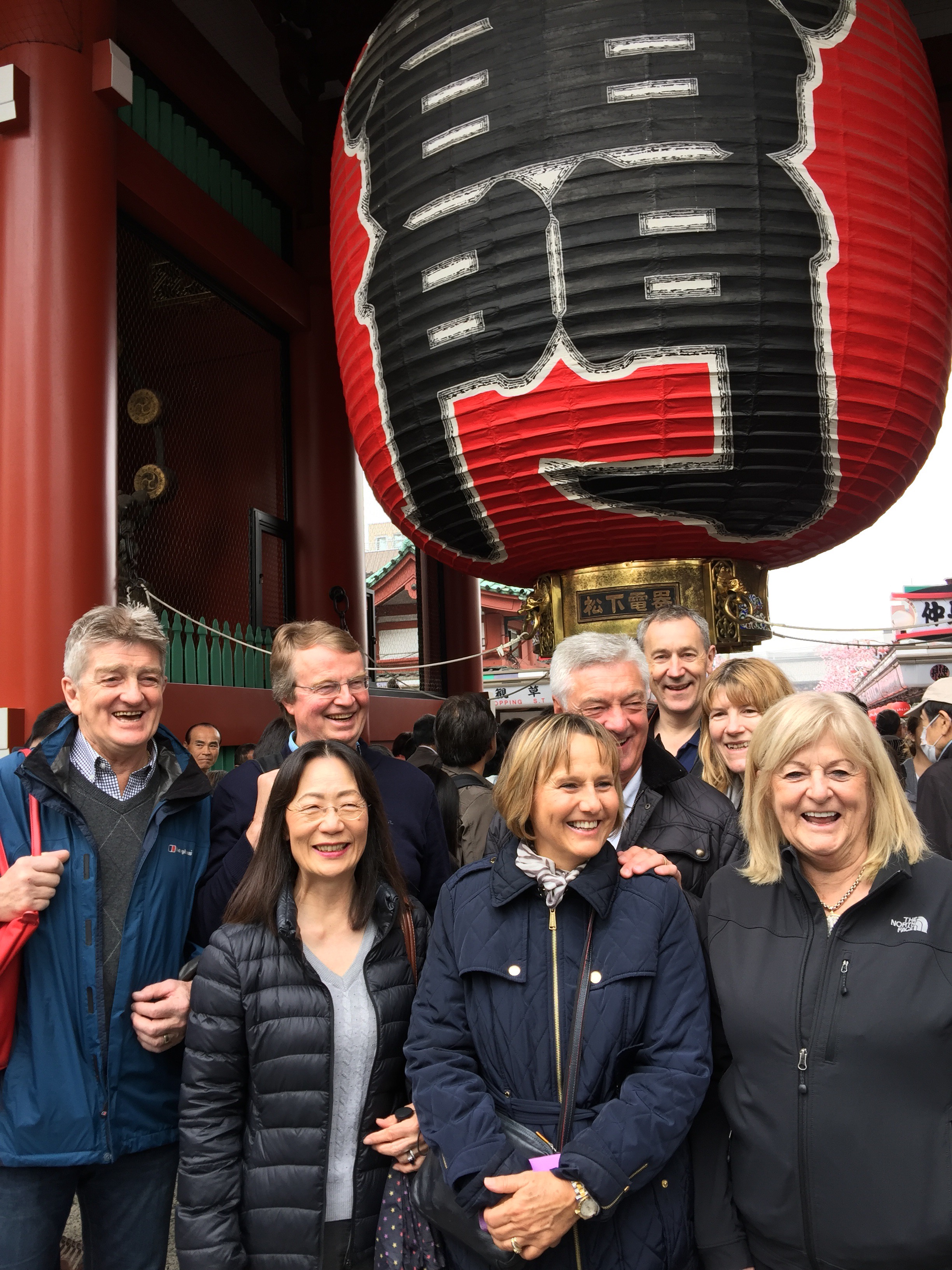
 So Sunday saw us playing the fool, we toured part of Tokyo which is called Asakusa,the entrance to which is guarded by  Kaminarimon, the Thunder Gate. This gate with its giant lantern leading to a kitschy shopping street, is very popular with tourists and locals alike, especially on a Sunday morning! The gate was first built in 941 but not in this location. It has been destroyed many times and the current gate was only constructed in 1960! ( presumably it was destroyed by the fire bombing during  WW2).  
 At the end of this shopping street / arcade is the Sensoji Temple, which is Tokyo’s most famous and popular, but like the main gate is of post war construction.  

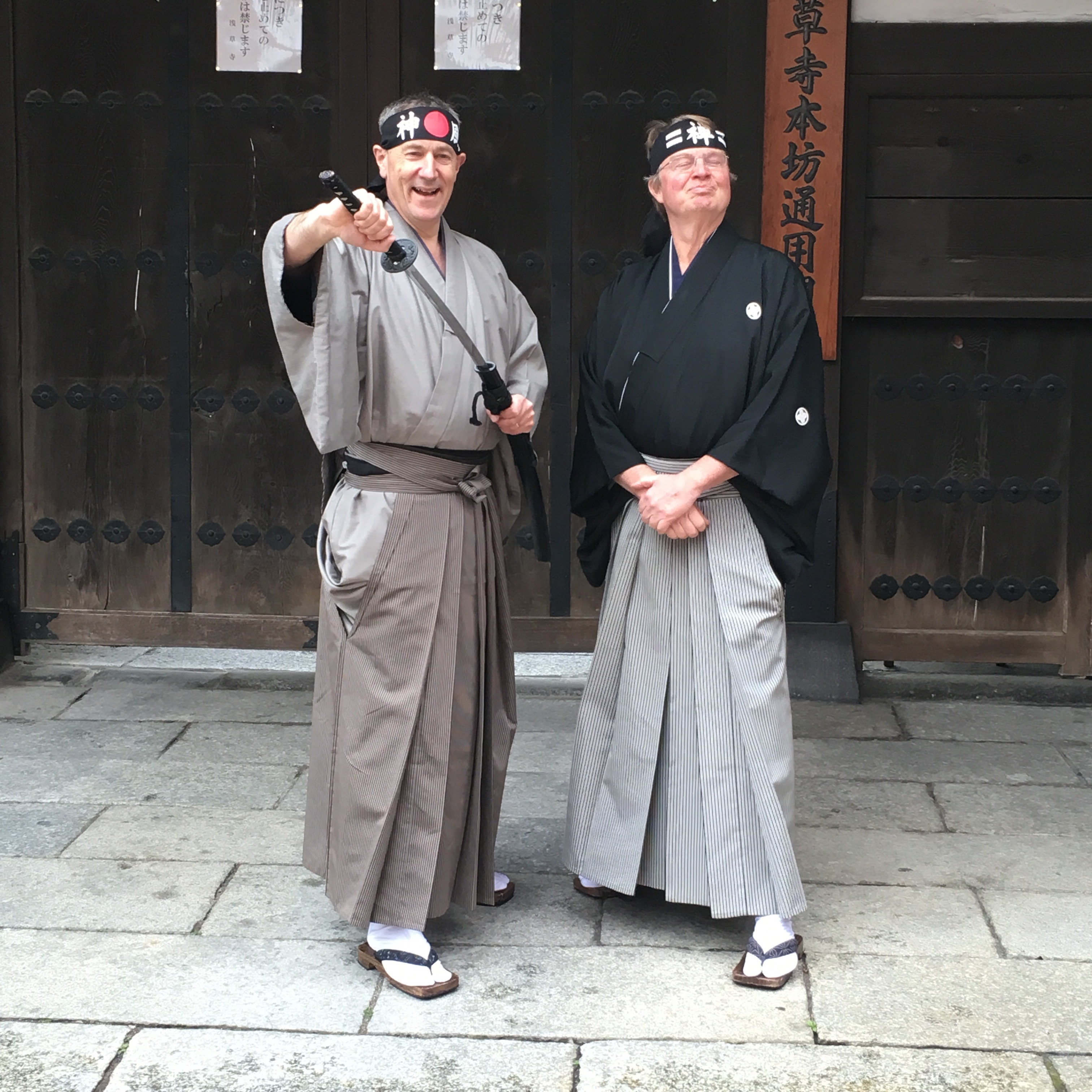
 The highlight of the morning was to visit Cocomo a geisha makeover , kimono rental store.(https://www.facebook.com/Cocomo.Asakusa

So, 6 of us decided that would be good fun, so we were ushered inside and chose our kimonos or in the case of the guys their Samurai outfits. ( the other two opted out, can’t imagine why !)

The donning of the kimono is in fact a very complicated affair. Firstly there are undergarments, which have to be fitted correctly, then more undergarments, then the kimono, then a belt to keep everything in place before the Obi  ( sash) is fitted and tied, before the corded belt is added. Not to mention the special toed socks and thonged wooden ( uncomfortable) sandels.

The traditional Obi could be as much as 68 cm wide and 4 metres long, but today mostly worn by Maiko and Geiko ( Geishas) or for weddings. Originally the Obi was tied in the front, but always nowadays tied in the back. They are made with stiffened brocade and usually unmarried women wear very colourful ones. There are ten ways in which to tie the Obi and one way is the ‘Taiko Musubi’ the drum bow. Our dressers, although they took great pains to make us look pretty authentic, ours were very much of an easier tie.

We had the choice also of hair and makeup, but settled just for the clothes. We had wondered why there were so many girls and women wandering around the shopping streets, wearing Kimonos, now we understood, as we were encouraged to go out and about on the streets. As we wandered out,we were astonished to be such a hit with so many people, our photo was taken several times and we were joined at one point by a group of young people, who thought we were hilarious. 


Our Fun Group photograph,with the Tokyo tower in the baxkground
  
  
In the afternoon, we went off to an area next to the Akihabara Station. It is called Electronic town. One building there, has 9 floors about the size of two or three football fields. The whole of one floor is devoted to toys, many of which are electronic computer type games, another has household appliances, over a 100 types of microwave ovens alone!

This area is also known because in 2008 a truck was driven into the shopping center and 17 people were stabbed! 
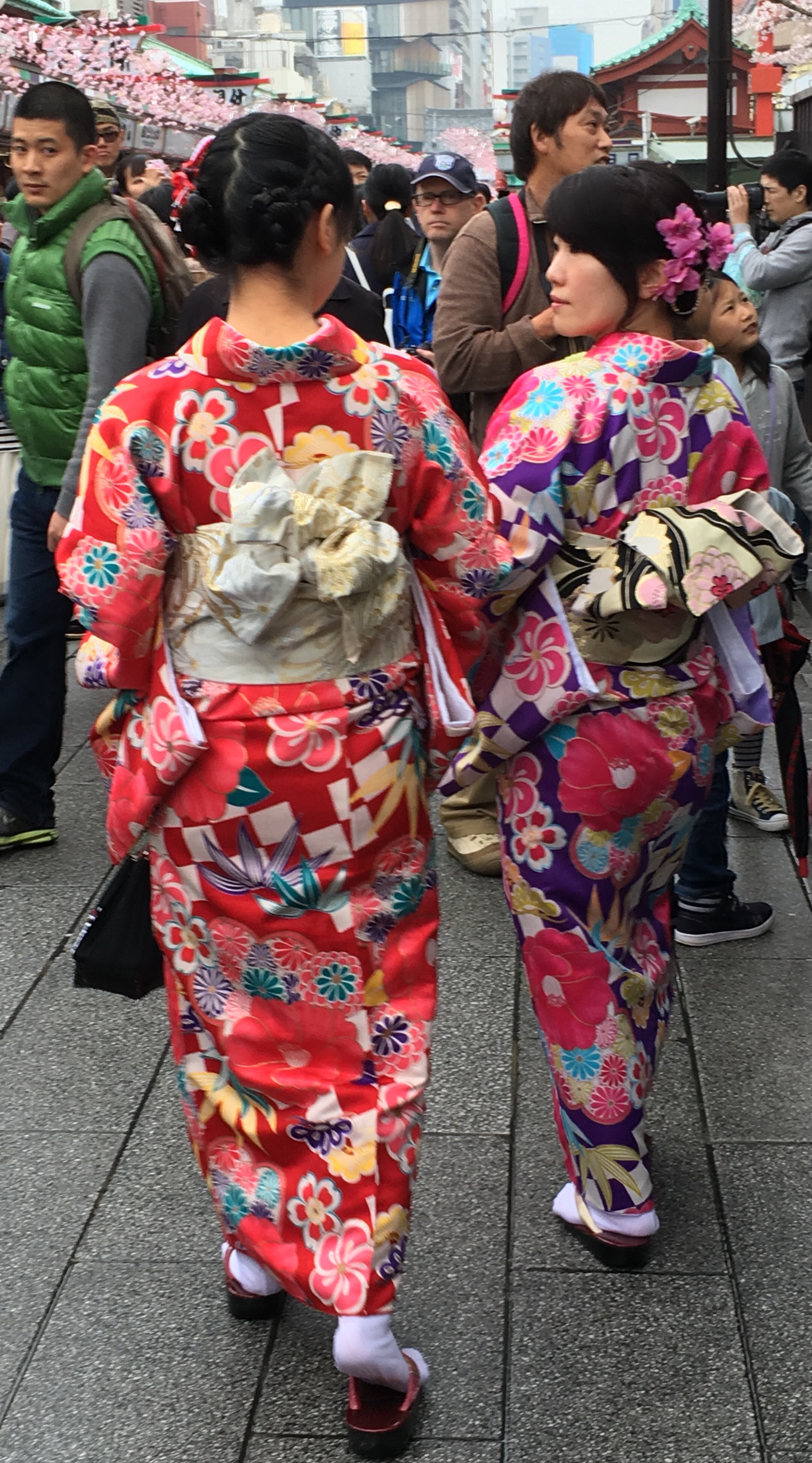
  

Asakusa shopping Street
  
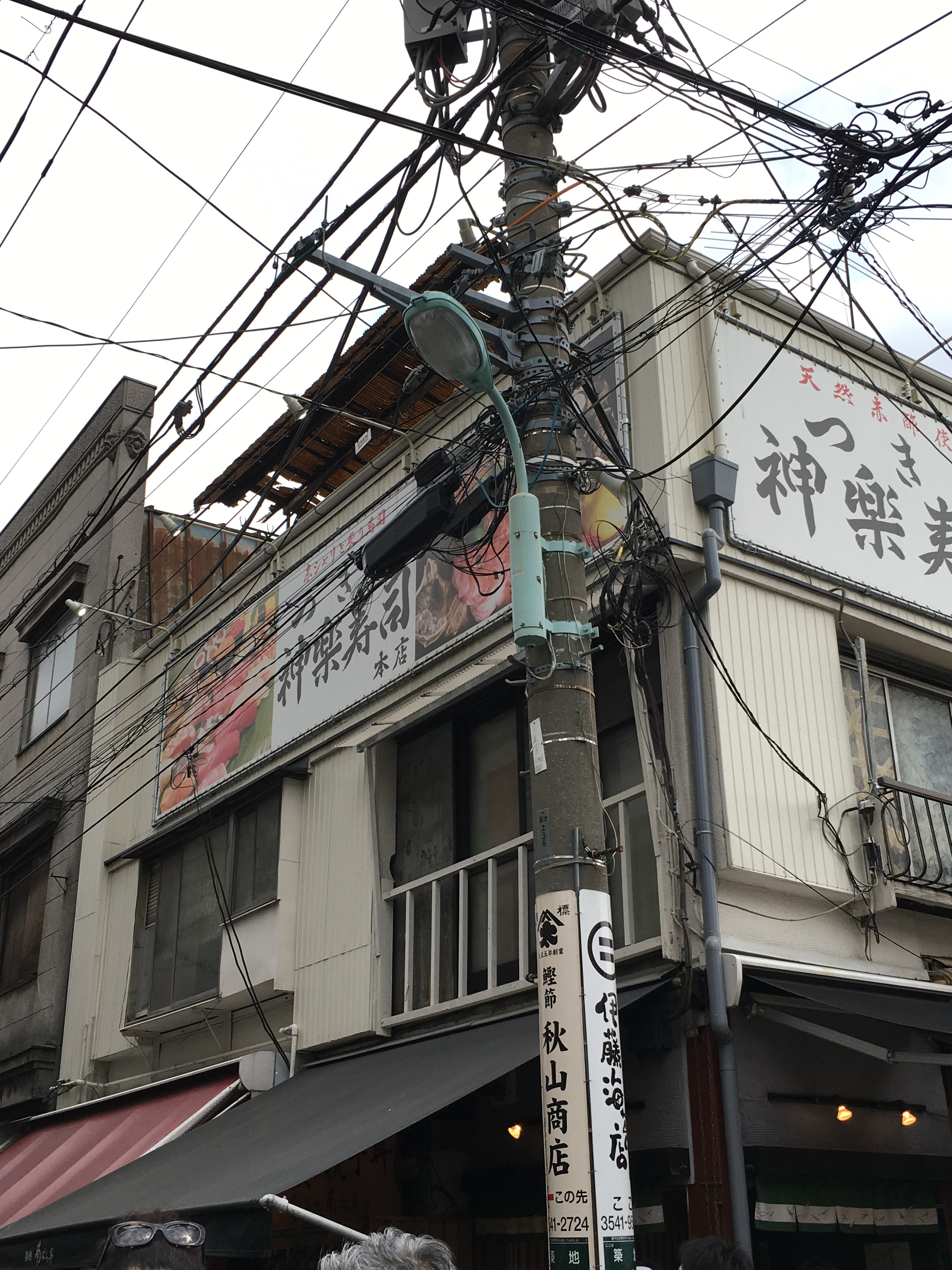
Duboius overhead wiring
  
Interesting souvenirs!
  
Not quiet the real thing
  
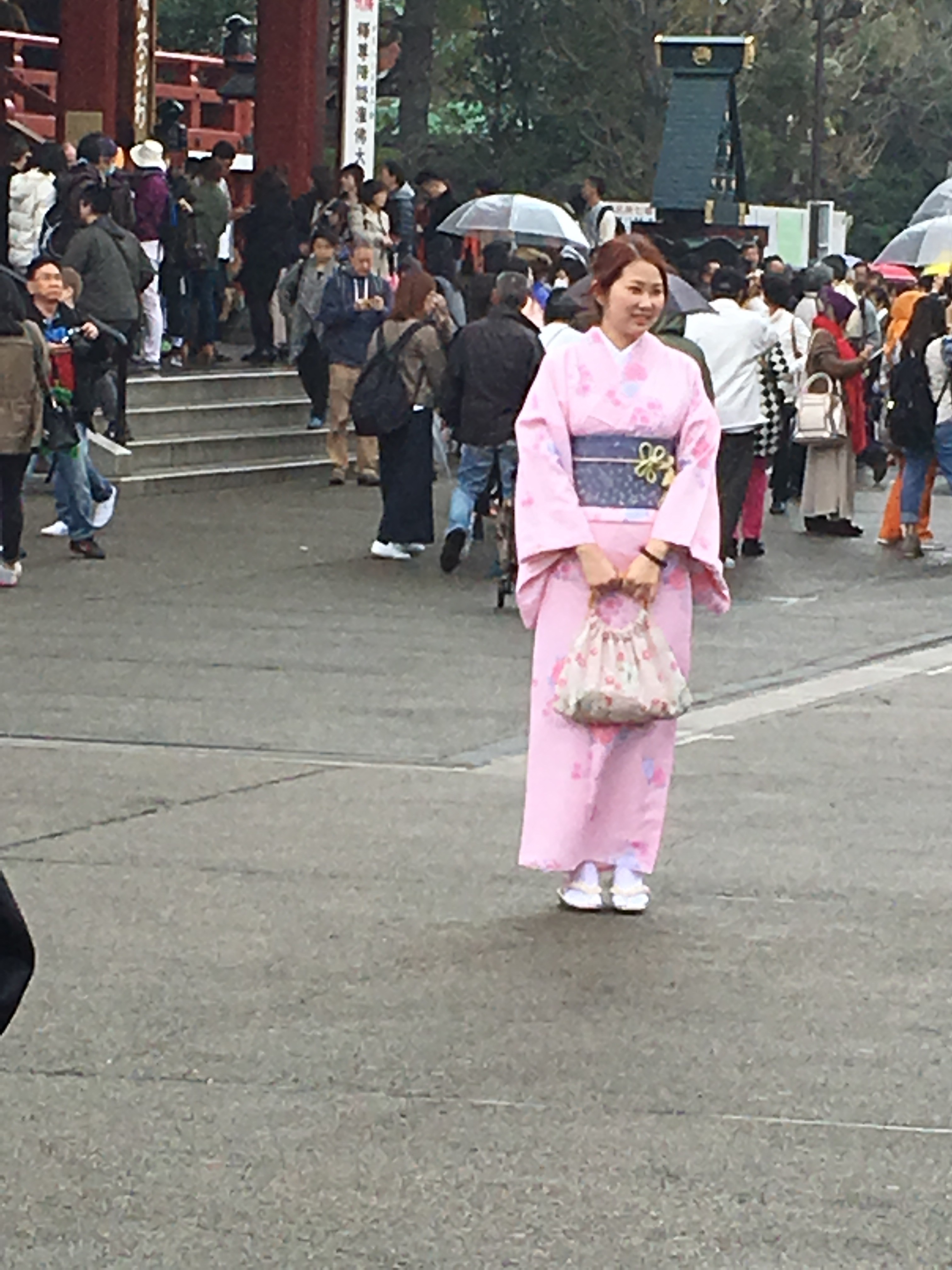
A local girl out shopping
  
Sign seen on the Tokyo underground!
 

Sunday evening at the International House of Japan.

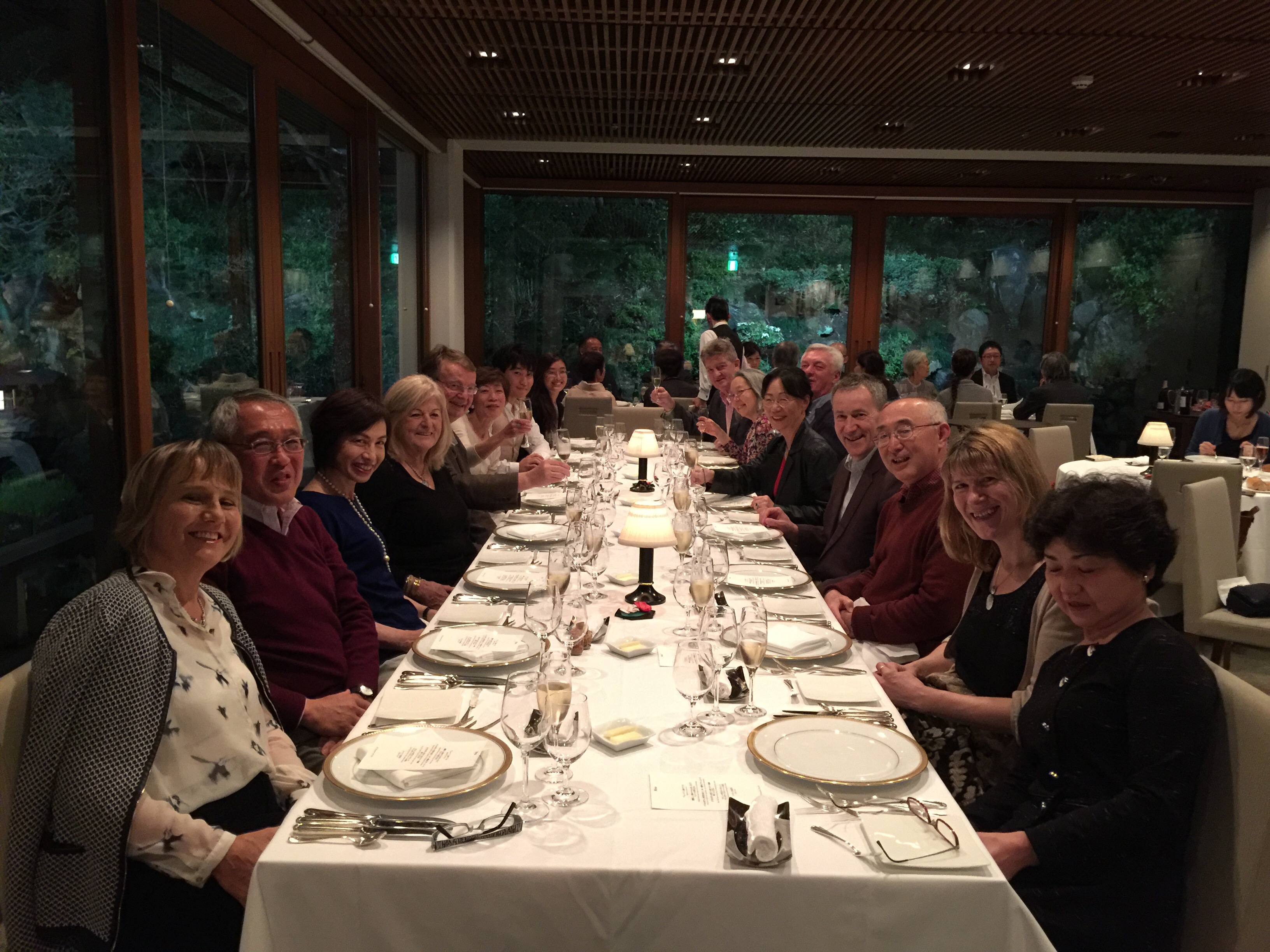
After our busy day trip to Nikko, we were all invited to dinner at the  International House of Japan. This is the former home of Koyata Iwasaki ( of Mitsubishi )  and is situated in beautiful grounds not far from the Tokyo tower, it was established in 1952 by Nelson D Rockerfeller and Shigeharu Matsumoto. There were 18 ( I think) of us , of which we were 8. All of the rest were Japanese but they all had lived and worked for many years overseas, including the USA and the UK, so language was not a problem. Our host,  a member of this club had kindly arranged a special menu for us, and had arranged the seating so as to ensure we all had ample time to chat with everyone. Interestingly, he is studying wine and hope to take his exam in the not too distant future, and consequently some of the wine he had chosen for the evening was in fact Japanese, which is a growing industry.

Our menu, consisted of the following:-

  1. Carrot Ice
  2. Smoked chicken cake with mango
  3. Pan fried rockfish with vegetables and curry cream sauce
  4. Pan fried lamb with parsley and mustard sauce
  5. Cassis and kirsch mousse with a raspberry sorbet.

  We were very fortunate to be able to have this dinner in the International House of Japan, and to have Lamb on the menu is exceptional as , was explained to me, it is very expensive in Japan, however our hosts all had developed a taste for I whilst living in the UK!
an unusual starter, carrot ice, delicious though
  
The Tokyo tower and cherry trees at night
  
Dinner in the International House of Japan
  
panfried Rockfish in curry sauce
 

On the Road again, day three

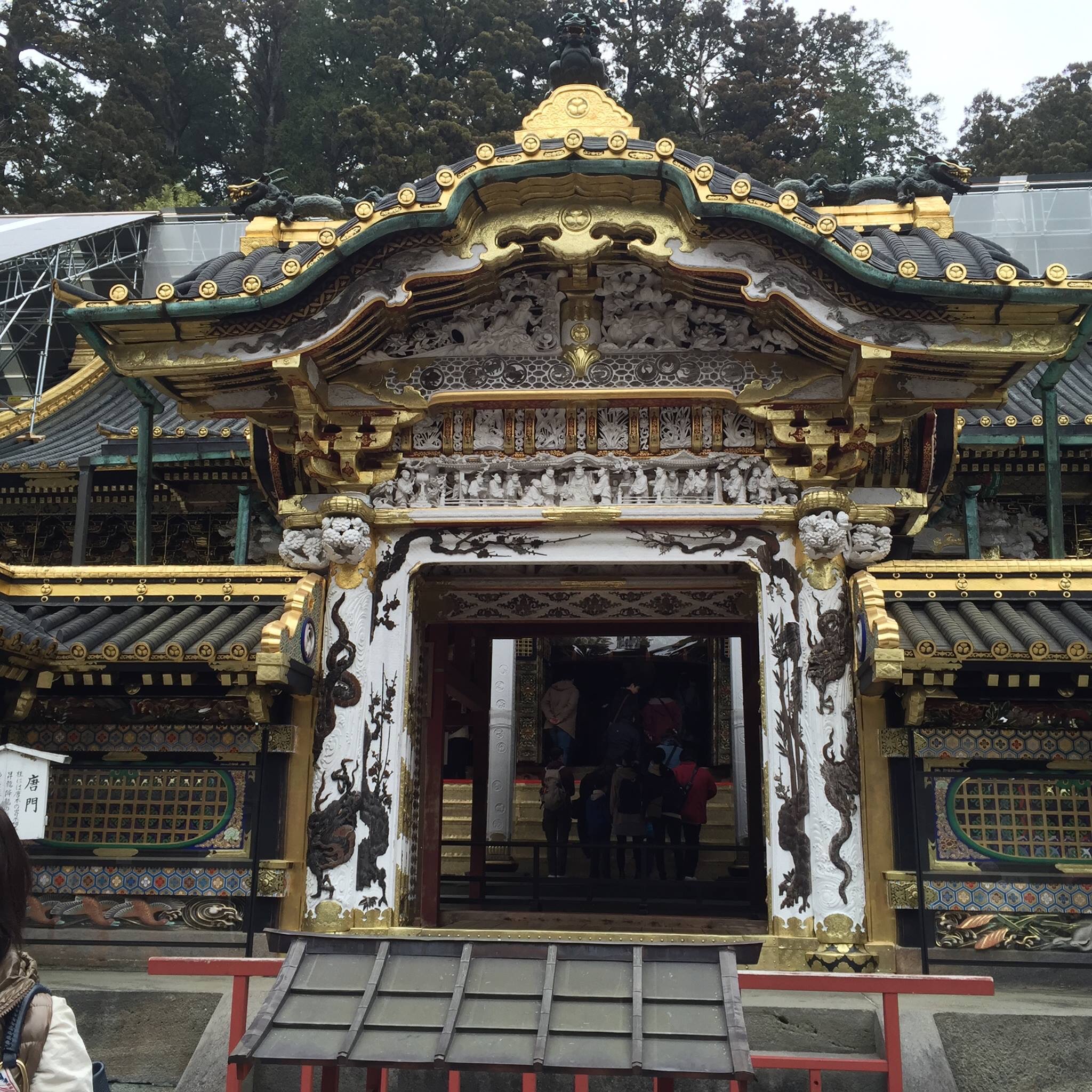
This day saw us becoming real tourists and taking a tour bus to the town of Nikko. This is a small town  about 150 km north of Tokyo, in the Tochigi Prefecture area. 

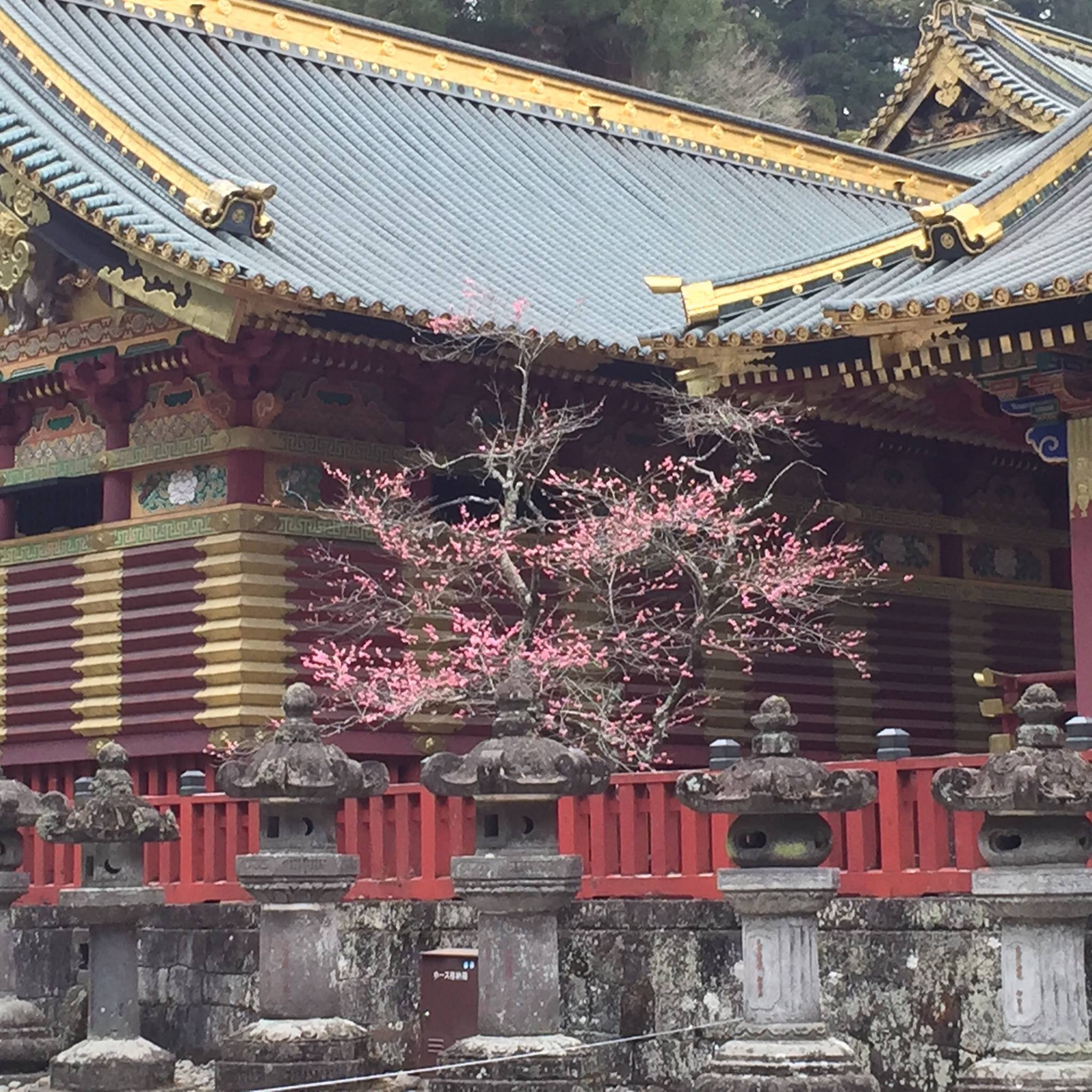
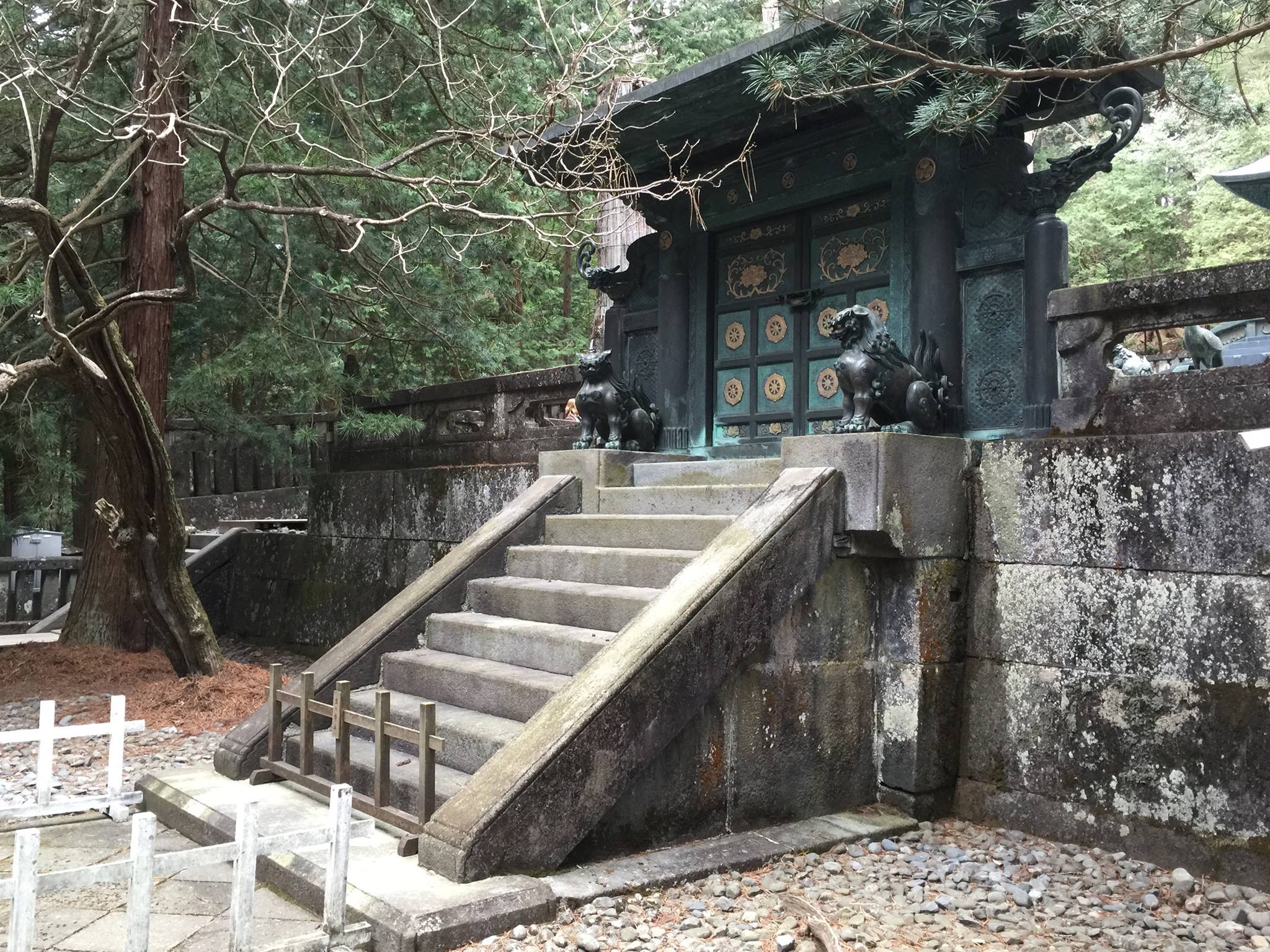
We started our day at a rather chaotic bus station, where there were buses and tour guides departing, everywhich way ! We boarded our bus and set off for a rather long bus ride to Nikko. Nikko is famous for a Toshugo Shinto shrine built in 1617. It is also famous for a Botanical garden , which has according to Wikepedia over 2,000 species . There is also a 35 km avenue of 13,000 Cedar trees, ( listed in the Guinness book of records )which was established over 400 years ago when  200,000 trees were planted . The Cedar tree is the national tree of Japan.

The entrance to the shrine surrounded by Cedar Trees
  
The main gate
  
Loggers at work on one of the 400 year old trees
  
Part of the shrine elaborately decorated
  
  
The Cutest boy in town
  
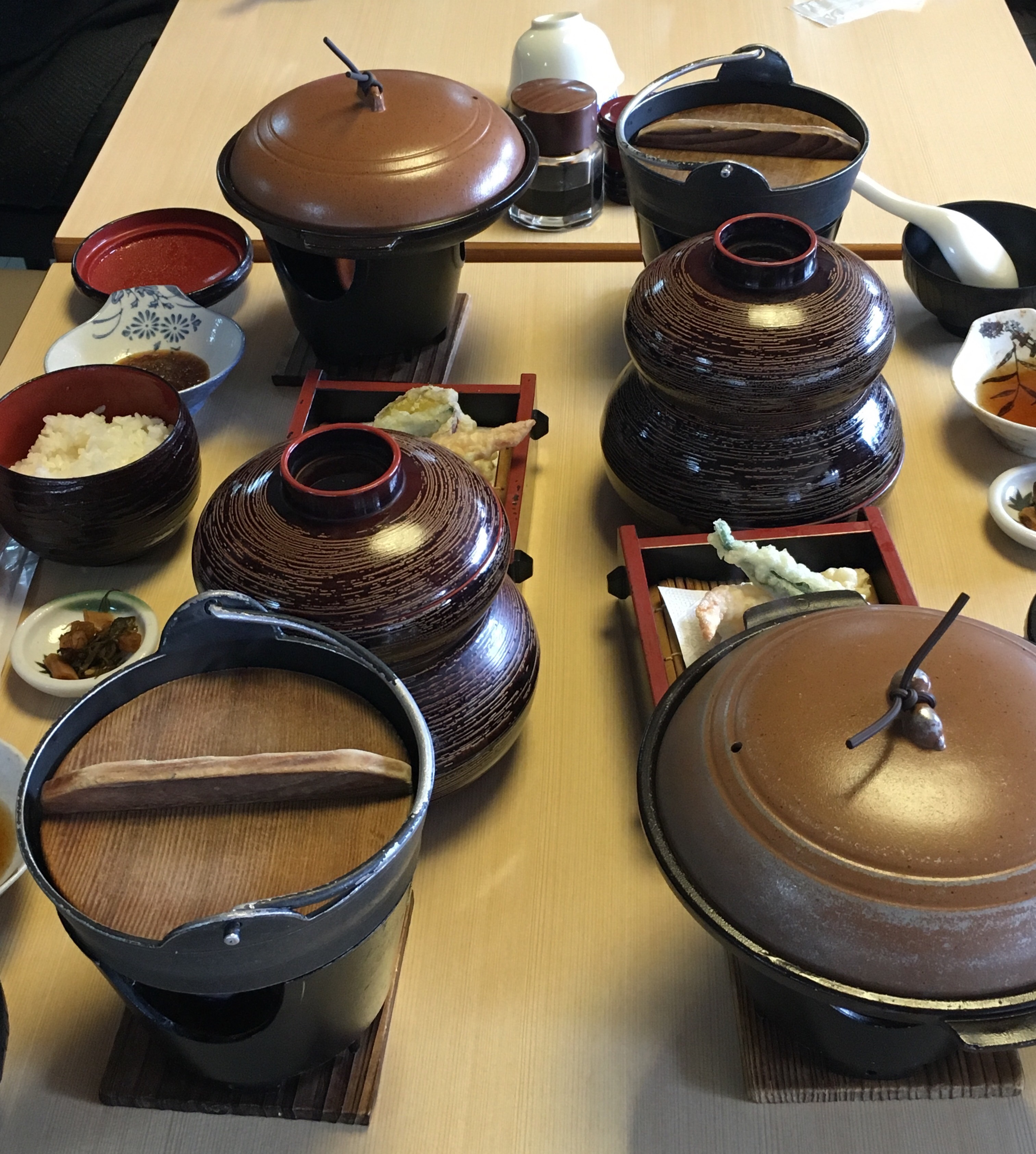
 Apart from the impressive shrine, we had lunch at a road side café, which catered just for the bus loads of tourists, which were carefully stage managed by the various tour guides, so that not everyone descended at once. What was quiet amazing was that we 

lunch time tray for one at the roadside café

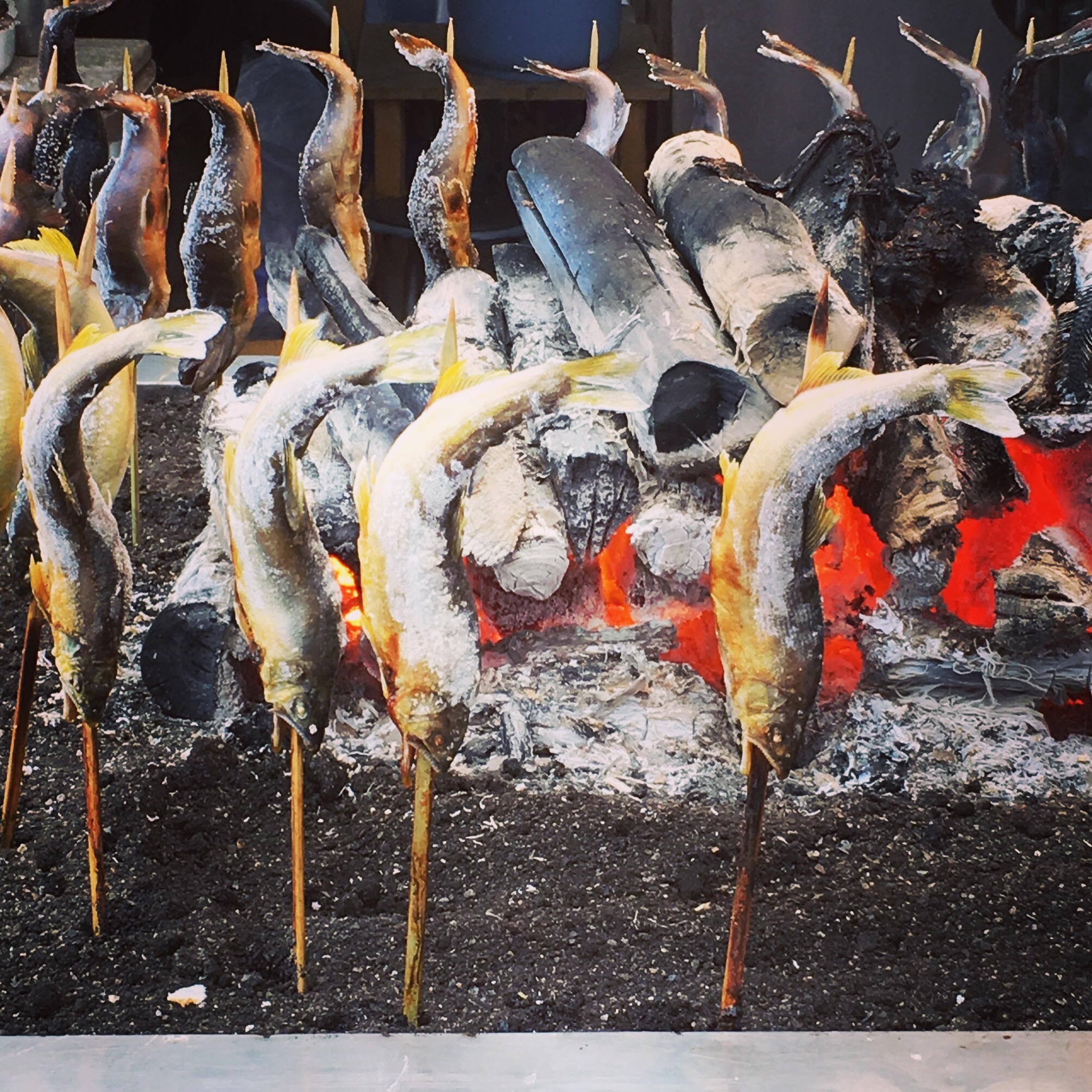
Freahly grilled fish
  were given a choice on boarding the bus, meat or vegetarian and you will see from the lunch time photo, that it was impressive. We could have eaten the freshly grilled fish which looked and smelled just wonderful .
It is a long dive for Tokyo, but given our time restraints, this was the only way. 

On the road again, part three

So we are actually still on day two, getting a bit behind here, but the days are jammed packed and so little time to do anything else.

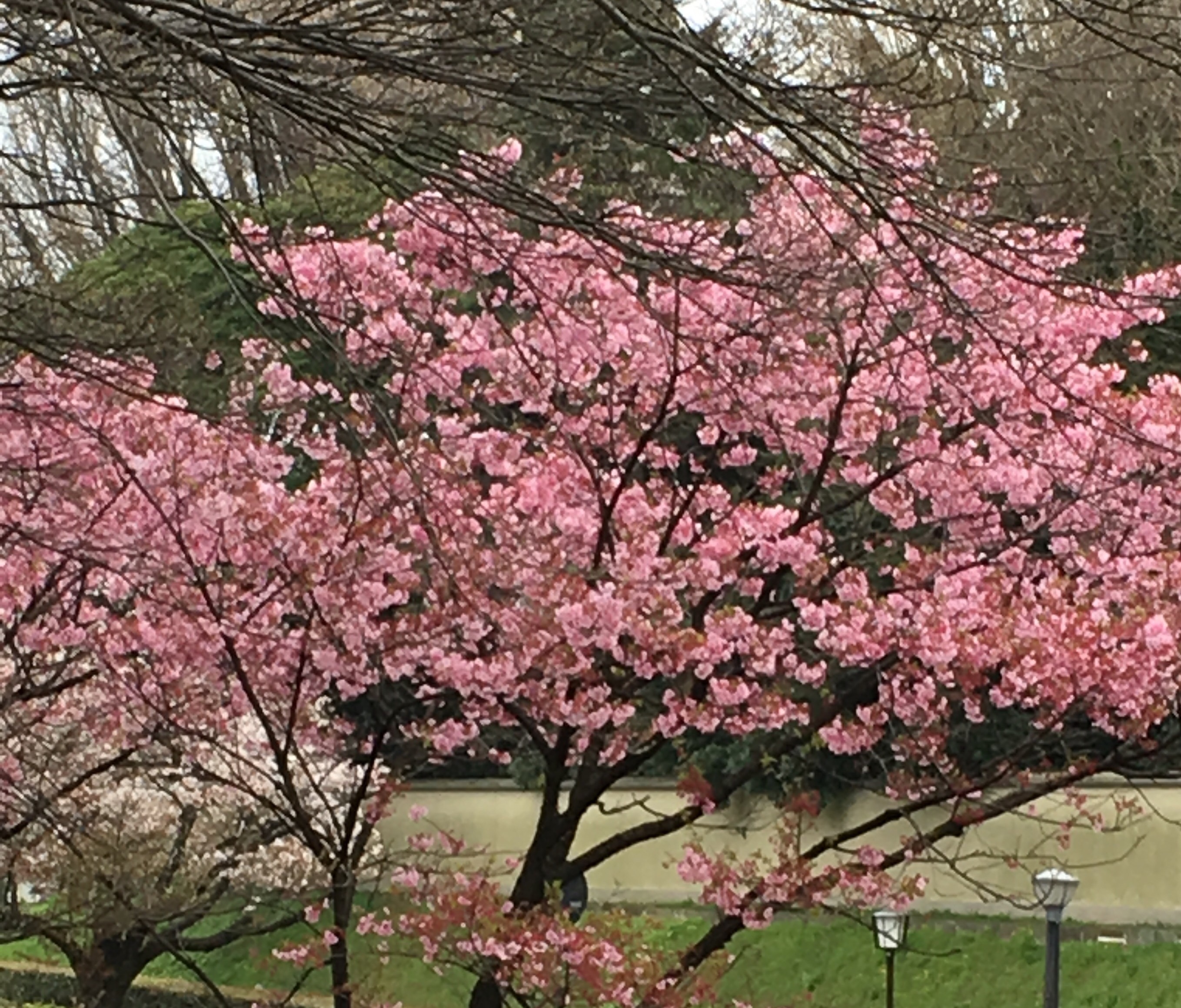
So after our Sushi lunch we headed towards the Imperial Palace, one of the best sites in Tokyo for Cherry Blossom viewing. As with any blossom, the season is hit and miss and one torrential down pour or gale force winds, and they are gone! But we were  in luck, they were in full bloom and so along with half of Tokyo we joined in the shuffle around the lake to enjoy this absolutely magnificent sight.

In Tokyo, the best viewing area is the Ueno Sakura Matsuri which is the park by the lake. During the Cherry Blssom festival the park is lit with over a 1,000 lanterns for nighttime viewing. The park expects several hundred thousand visitors daily, hence the shuffling . There are over 600 trees in this park alone.

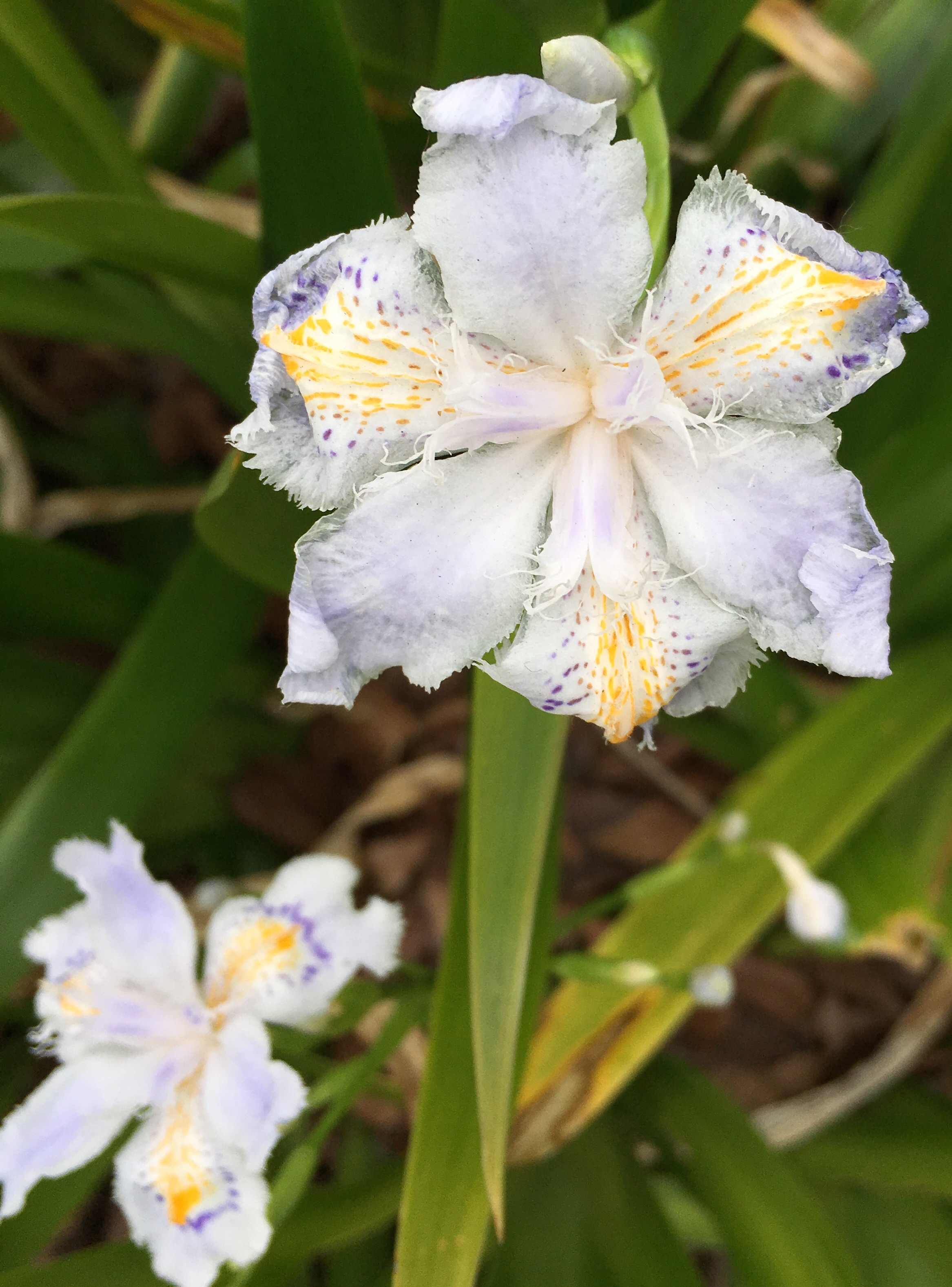
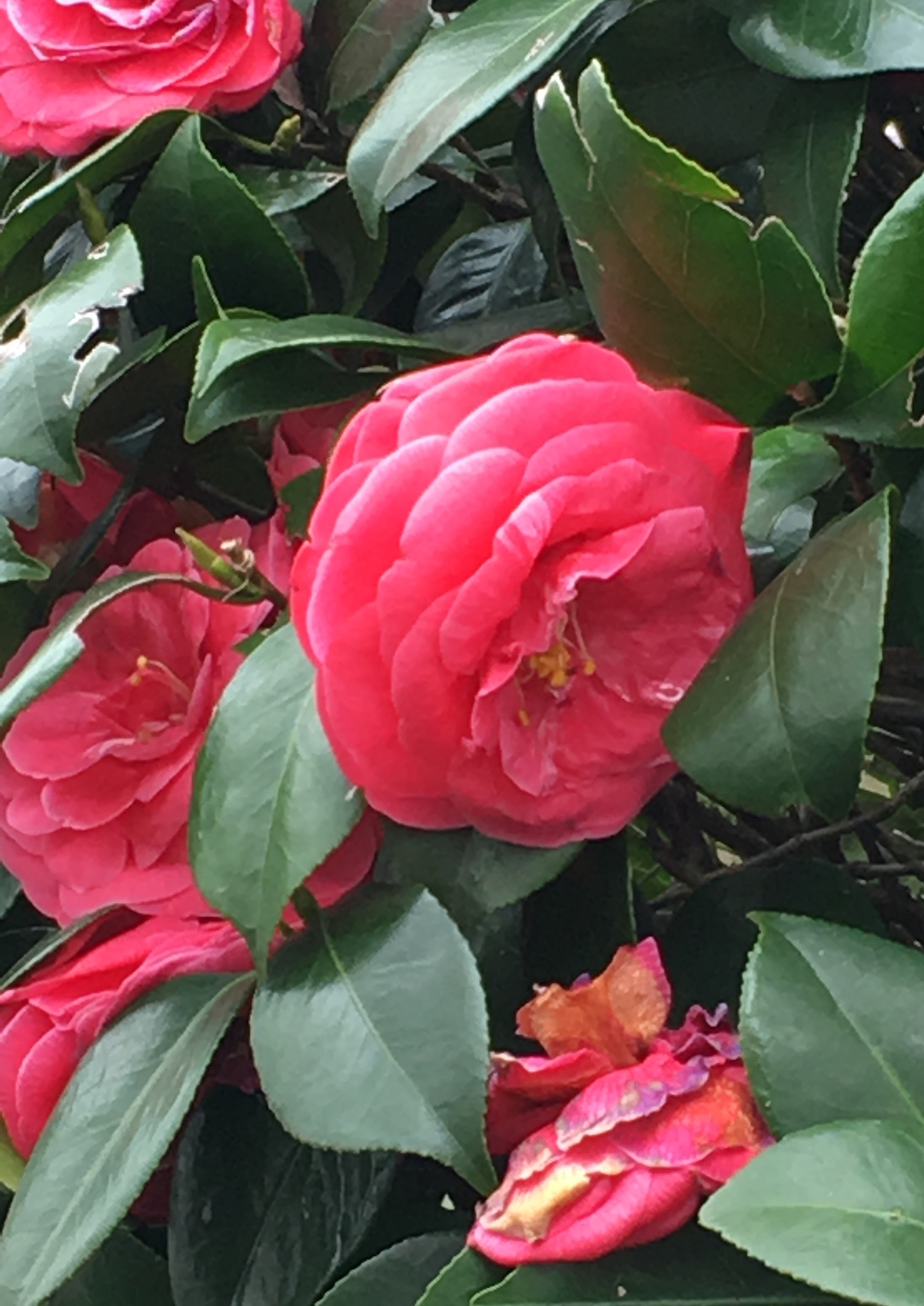
Throughout Japan, there are cherry trees at this time of year and depending on your location the blooming time will vary. For example in the mountainous region it will be later than in Tokyo. There are over one hundred varieties of cherry trees, ranging from white to pale pink to dark pink and even to yellow and green. Most of them have five petals but some have 10 or even twenty. One of the most beautiful is the Shiarezakura, the weeping cherry. Also in bloom at this time, of course are plenty of other spring flowers , but as is usual , blossom time brings rain and wind! After all they are not just there for our enjoyment! 


On the road again, ( part 2)

So Day Two here in Tokyo saw us at the TSUKIJI  fish market, which is not far from the Ginza district.
Tsukiji Market (築地市場, Tsukiji Shijō) is one of ten wholesale markets that deal with the distribution of fruit, vegetables, meat and fish for Tokyo. The  Tsukiji Market is one of the world’s largest fish markets, handling over 2,000 tons of marine products per day. Rumour has it, that the market, will move out of the city to a new site, later on this year. The market has attached to it, a fruit and vegetable market as well. The tuna auction takes place here also and any visitor has to apply at the auction office, early in the morning, only 120 visitors are allowed each day and they are also divided into 2 groups, the first being admitted at 5.25 and the second at 5.50. It reminded me very much of Billingsgate in London ( smaller) , though without the banter ( watch yer back darlin!) The other difference being is, in London the porters skilfully manoeuvre large metal trolleys around, whilst in Tokyo it is motorised carts,the porters, constantly beefing at all who should dare to get in the way ! Of course there is lots of Tuna but besides that all sorts of fish, fresh, dried and frozen! Some recognisable and some not ( should have come with my worldwide fish guide). One interesting item was Octopus eggs. Apparently they are intelligent animals and are protected within the EU. The male dies soon after mating and the female guards her eggs for up to 53 months ( depending on species) and then she dies! No fun being an Octopus then! So was very interested to see the eggs on sale, but am really not sure what to do with them!


ready shucked oysters
  
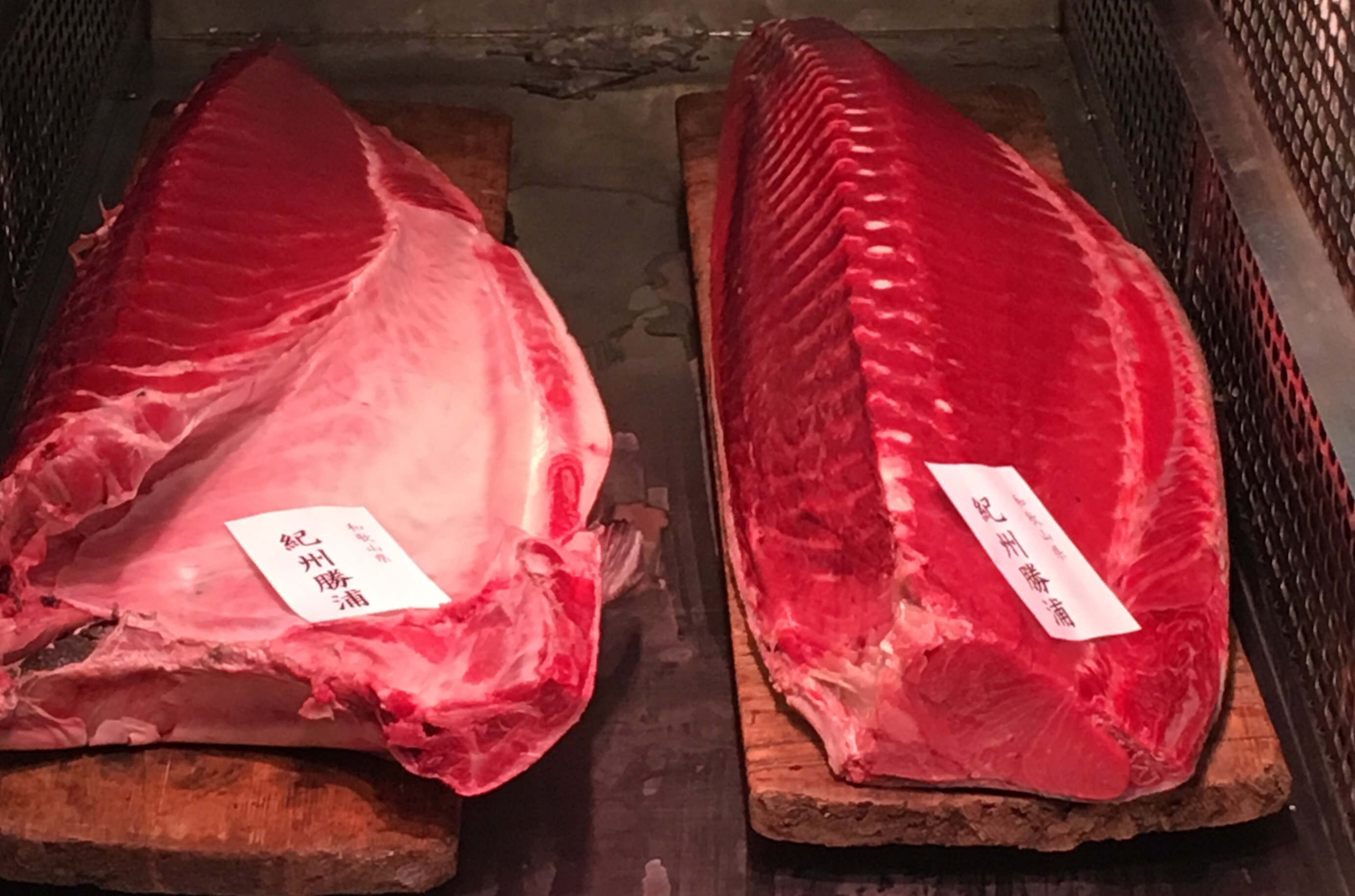
sides of Tuna
  
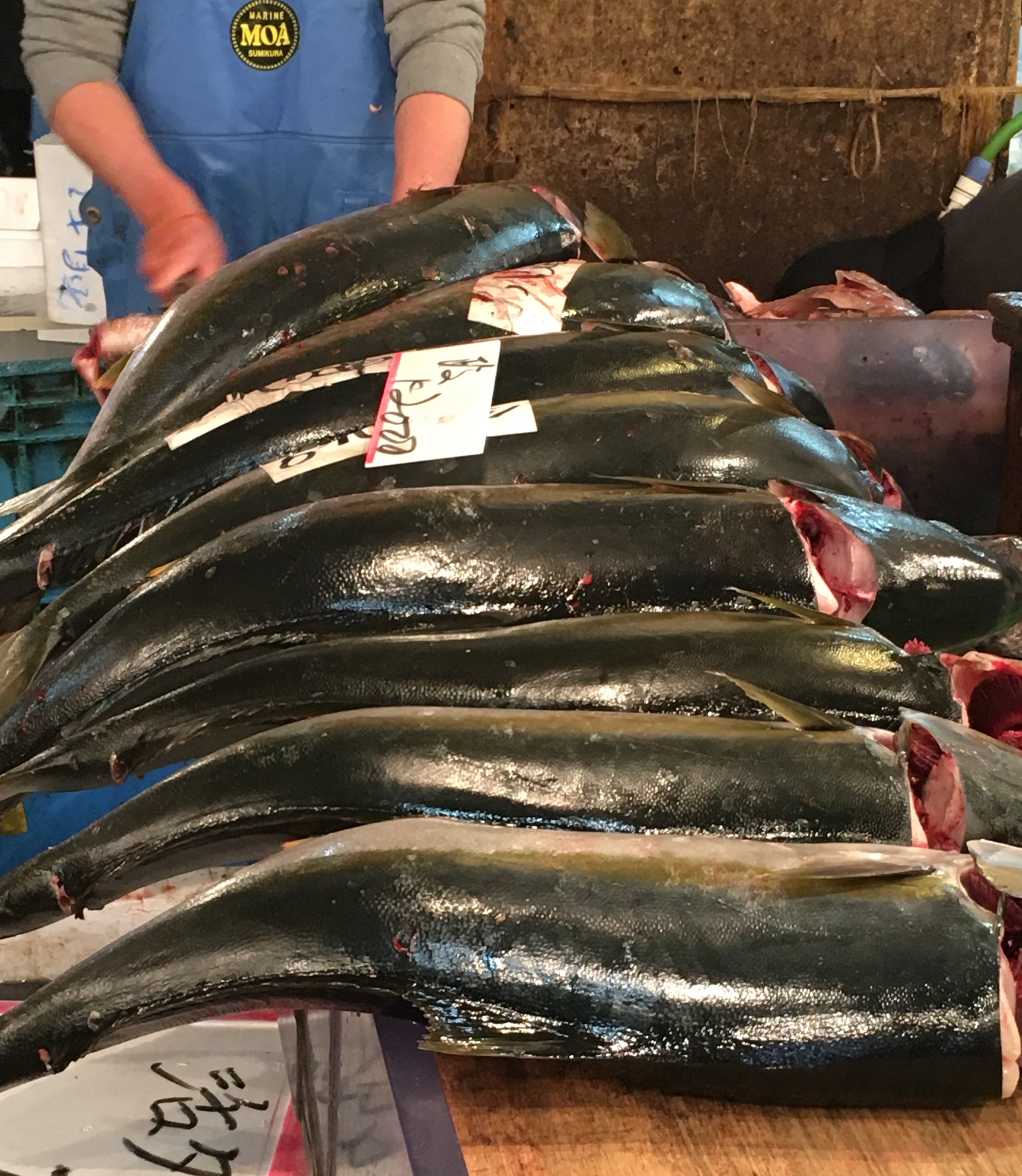
yellow fin tuna
  
cuttle fish
  
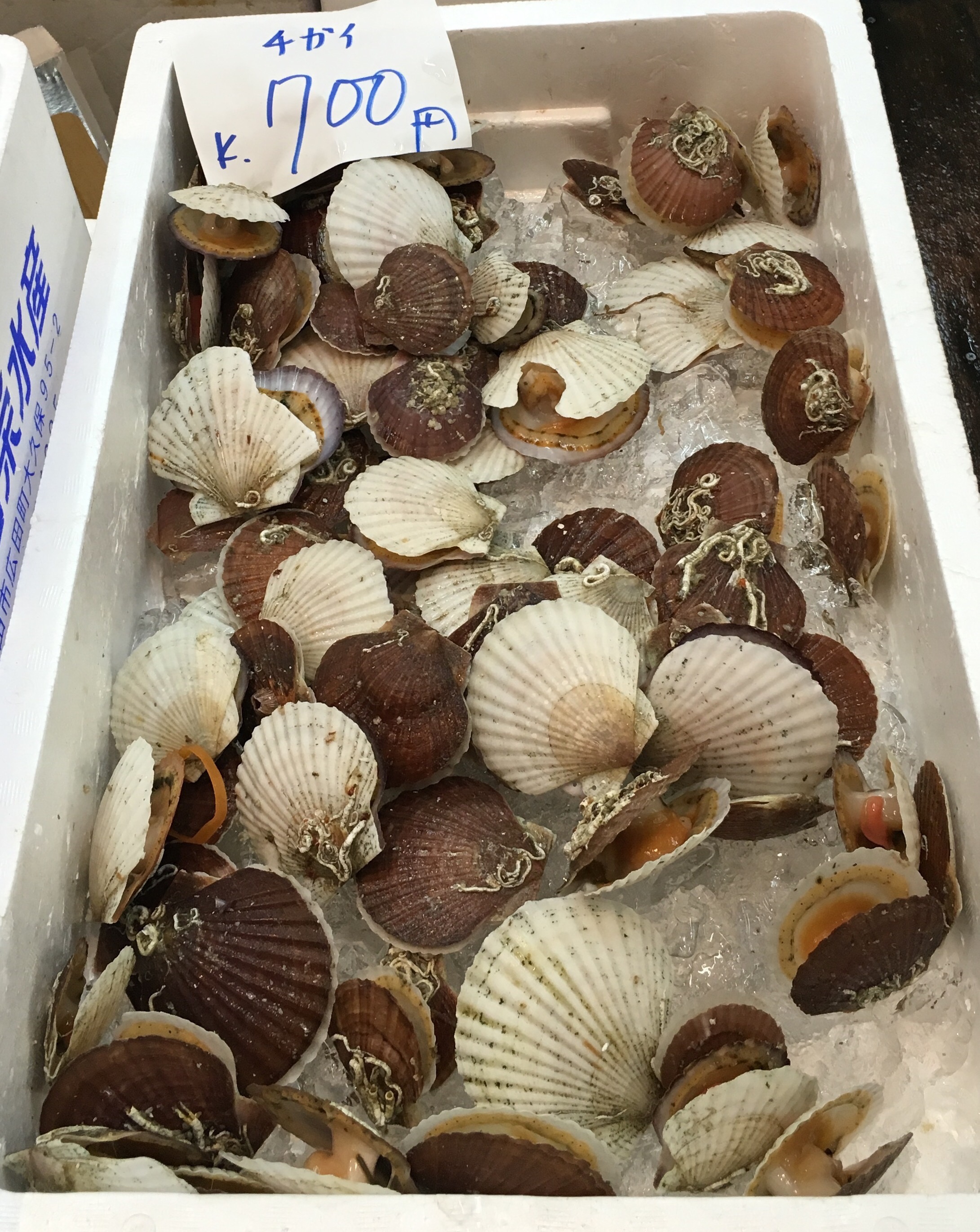
an abundance of Scallops
  
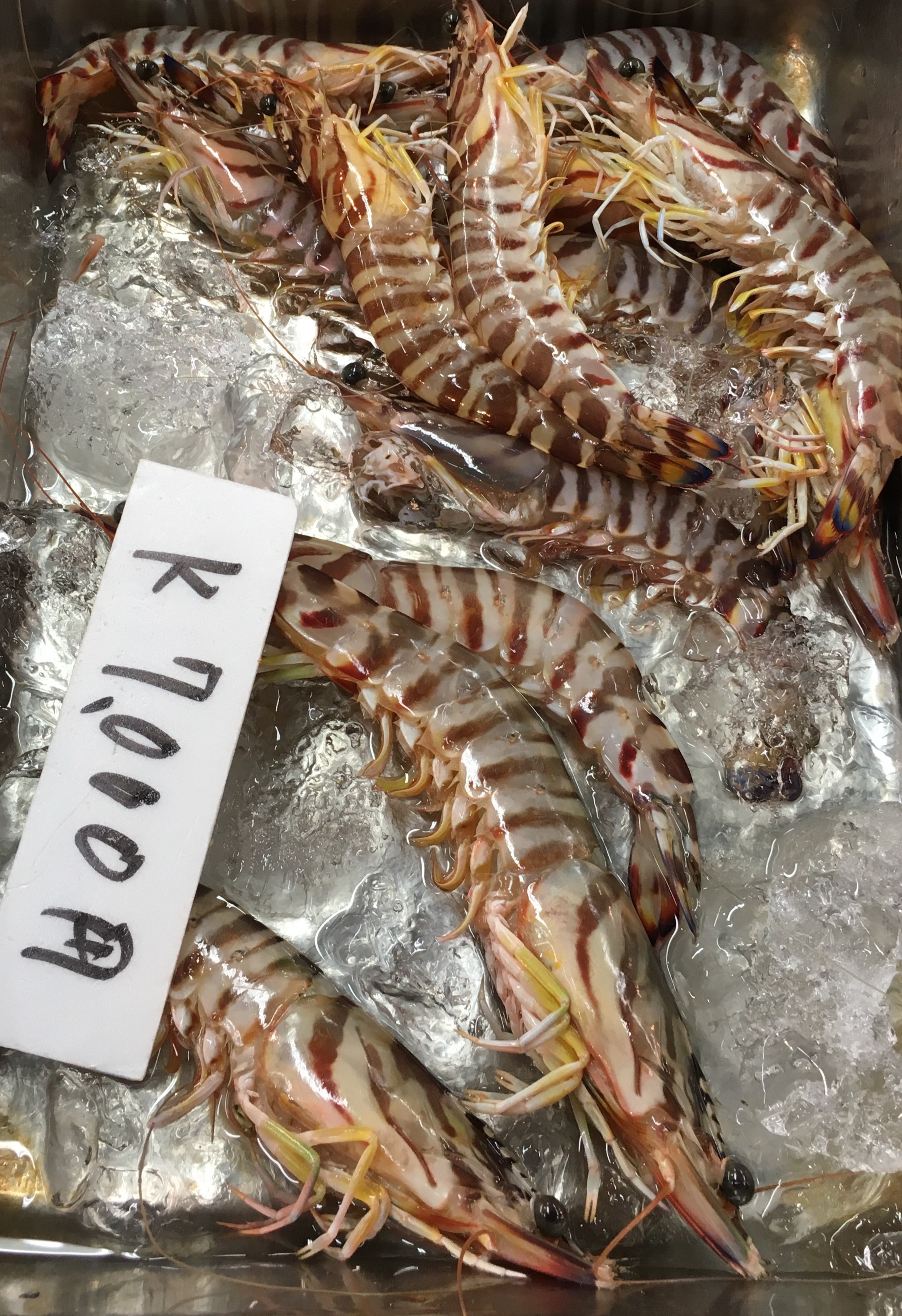
Large live shrimp
 

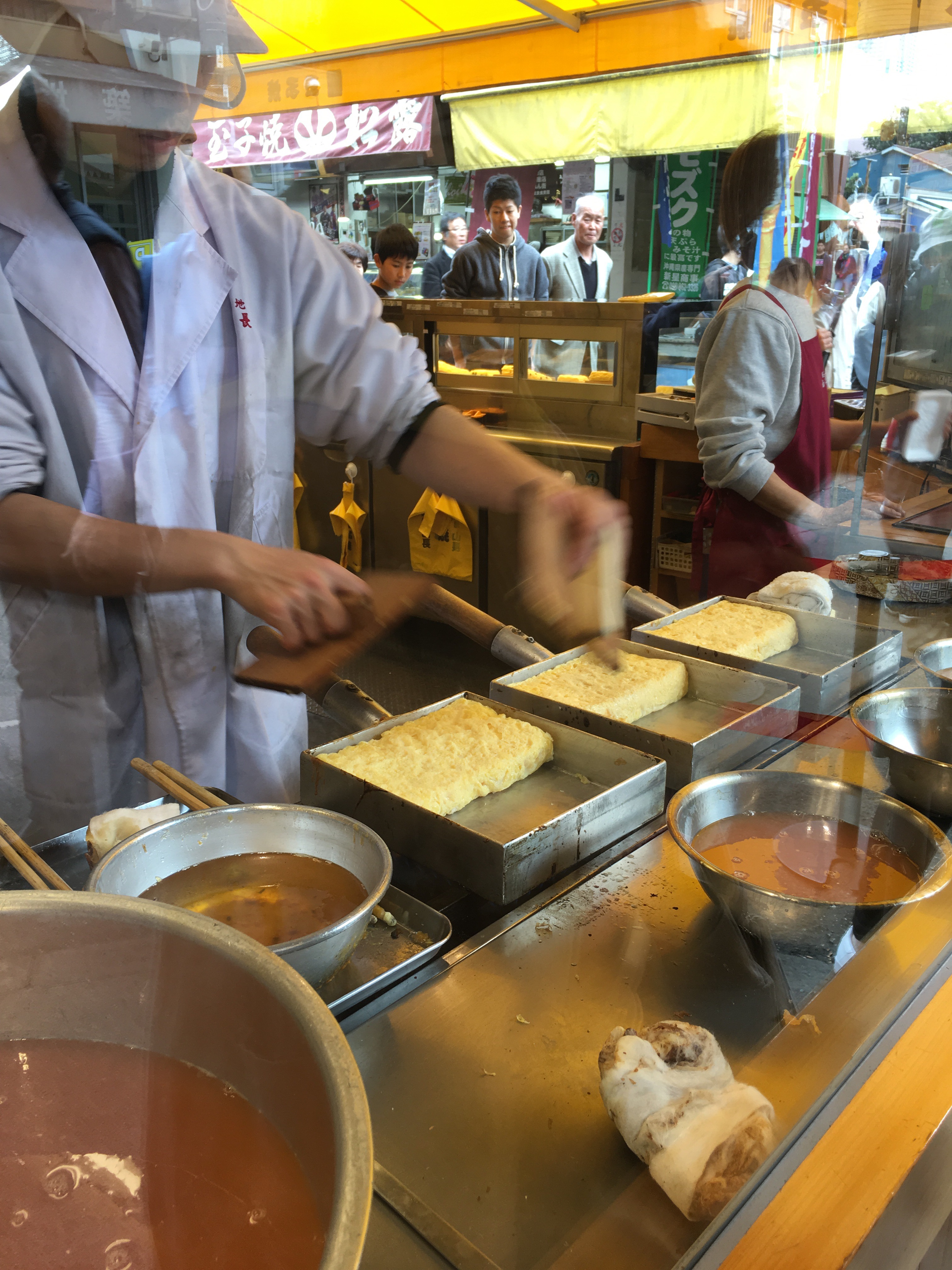
After a very interesting morning looking at Fish we stopped for lunch, also in the the TSUKIJI area, some of us had Sushi whilst others Tempura or baked fish, but no matter what, all were very good. I was tempted to try the Omelet on a stick from a street vendor, ( but had just had lunch). Interestingly they make it in a rectangular pan, quiet thick, and then cut it into lengths and put on a stick! Very innovative, I think I just need to  buy one of those pans!  


So now it is off to the Royal Palace to look at the Cherry Blossom!

On The Road Again ( Part One)

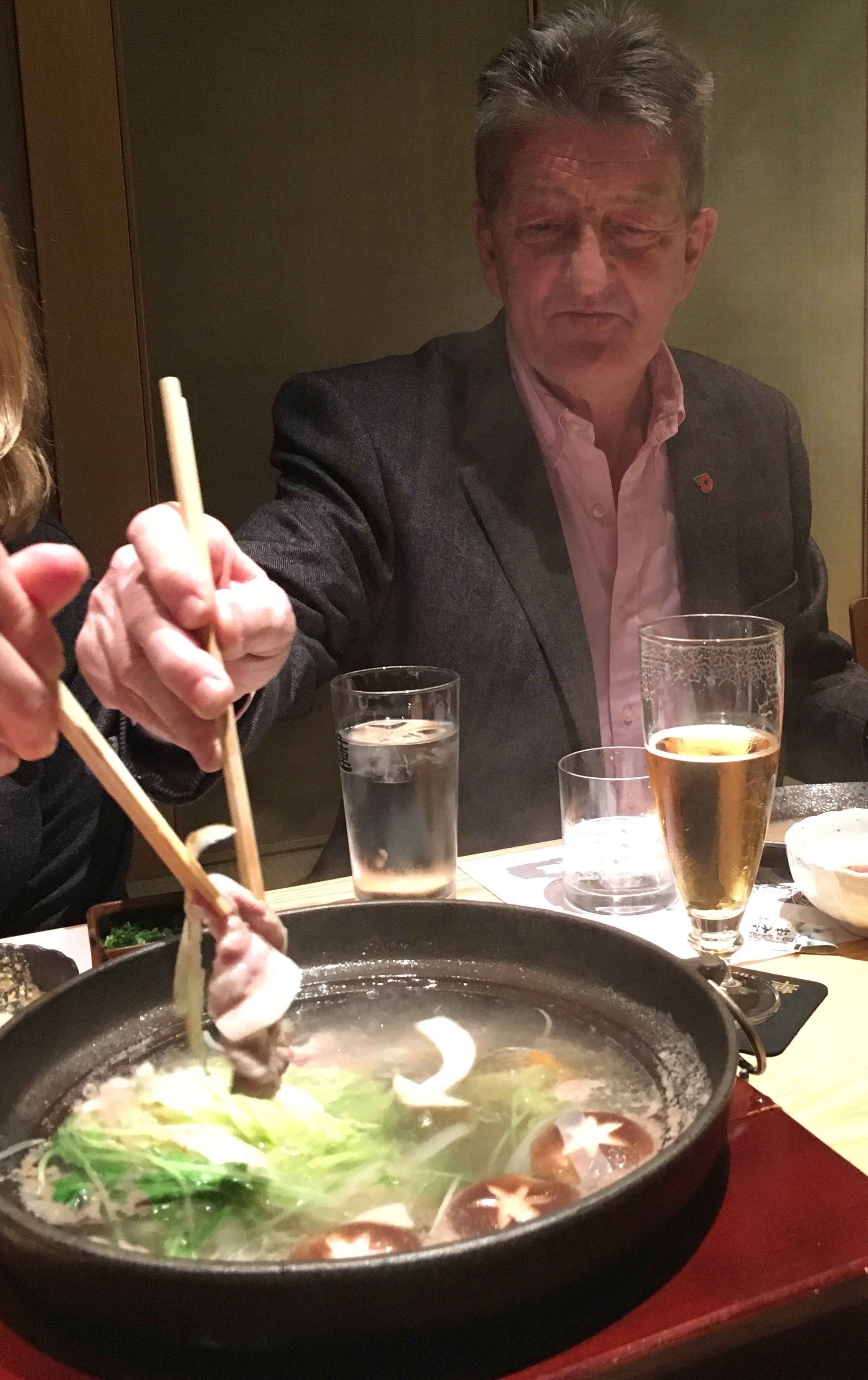
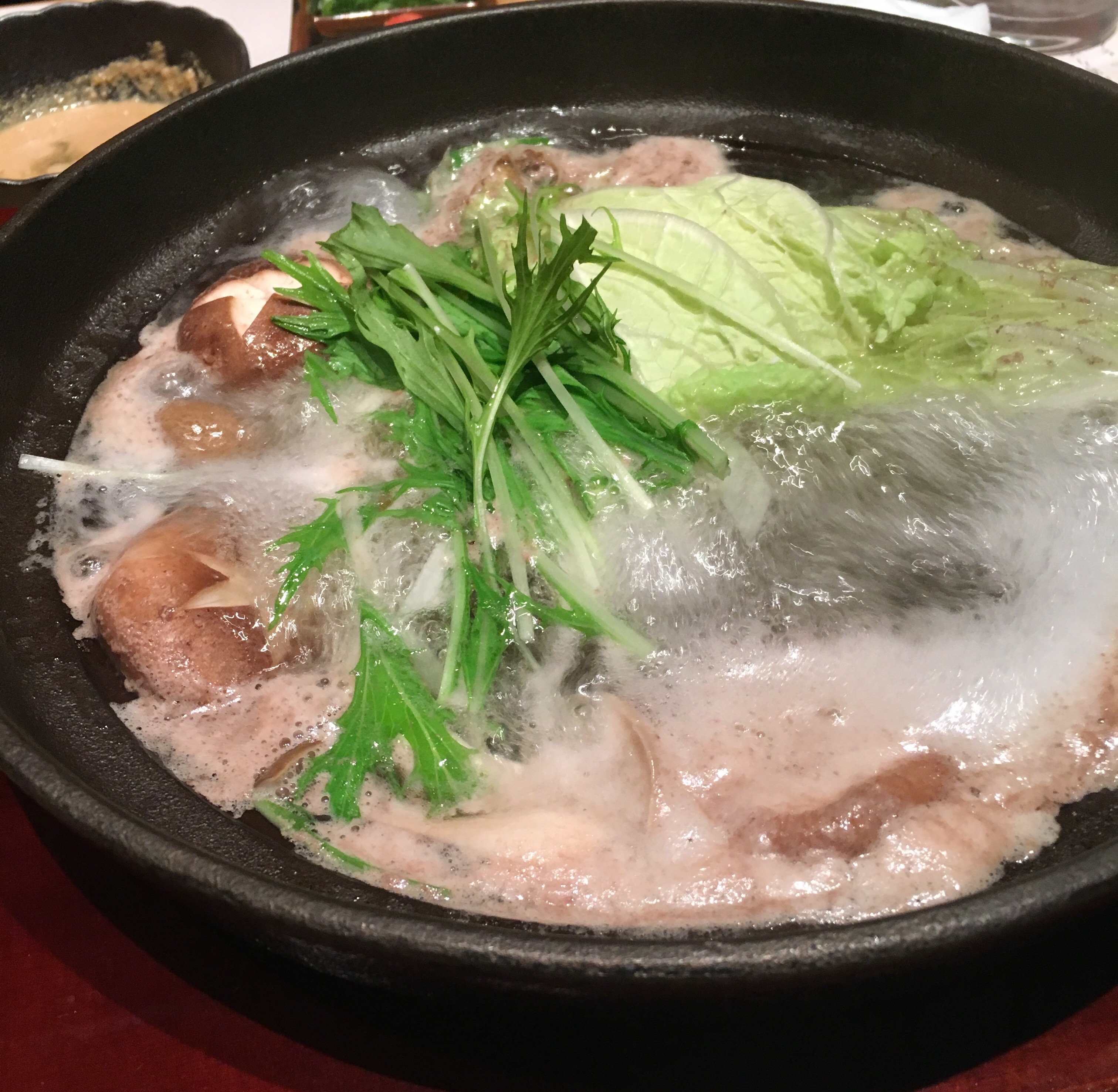
  This trip sees us in Japan, at the moment in Tokyo. Last night at the request of himself ( he who had fond memories of his various visits here) saw us eating in a traditional restaurant ( named Karen) eating Shabu-Shabu. Roughly translated it means Swish-Swish! Which is the sound the beef makes as you swish it, just one time back and forth around in the hot pot.

Apparently, according to Wikipedia, Shabu-Shabu  was invented in the 20th. Century by the Suehiro restaurant in Osaka and they registered it as a trade mark in 1955.

So what beef do they use for Shabu-Shabu? Well again according o Wikipedia it is generally Rib Eye, although I have never seen in the UK or the USA beef that is as finely marbled as that which we ate last night. 

 On arriving at the Karen restaurant which is in the Ginza district of Tokyo, we were greeted with a ” oh my bad knees ” moment as it appeared that we would have to squat at worse or sit cross legged at best at the table, which was at floor level. However we were all pleased to find that although we needed to clamber down to the floor, the table was actually set over a pit, so we basically sat normally but at floor level! Very enterprising, I should say ! 

 We ate copiously and the star of the evening was the Kuroge Wagyu, Japanese Black beef, from and area called Kagoshima . We were fortunate enough to be in the company of a Japanese friend and her husband, who had connections with the Kagoshima meat industry. So feast your eyes on our wonderful  dinner, and this was just day one!


Cheesecake ? Easy Peasy!

Cheesecake? Where does it come from? What is its origins? 

Cheesecake has been enjoyed throughout the centuries, it is believed to have been served to the first Olympians in 776 BC!!

It is almost a worldwide phenomenon with variations everywhere. Cream cheese was created in the USA in 1872 , it was an attempt to re create the French cheese Neufchâtel . Various others similar cheeses were also created at this time. Depending where you are the choice of cheese for cheese cake varies. In the USA and Canada it is nearly always cream cheese, in Italy -Ricotta, in Germany, Holland and Poland it is Quark ( a cross between cream cheese and plain yoghurt) and in France , Neufchâtel . The way they are made also varies around the world, some are baked, some have a biscuit crust and some a pastry crust. Some are set ( using gelatine) and unbaked . Some, most, are sweet, but some are savoury , as in smoked salmon or goats cheese with beetroot. I asked my Japanese friend the other day, as I had seen in an American publication something called “Japanese Cheesecake”! She laughed and told me, No, No, No, we love cheesecake but it is not something we make ! Apparently Heston Blumenthal has declared that Cheesecake is an English invention, not sure where that came from, as far as I can see it was the Greeks!

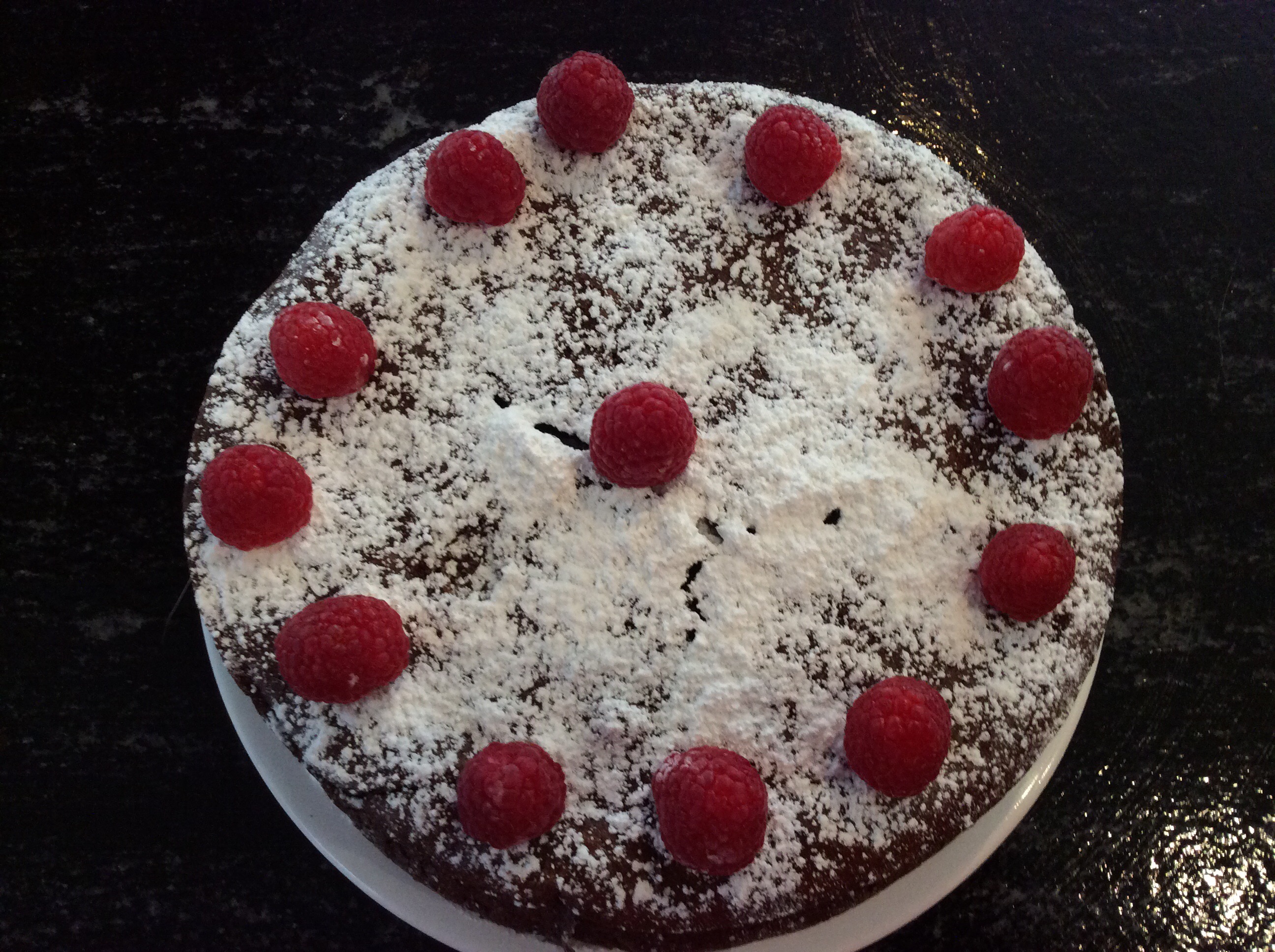
So, onto yet another very very easy cheese cake, that has no base and is a cross between a cooked chocolate mousse and a cheesecake!

I used

  1. 12oz dark chocolate ( with about 70%cocoa butter)
  2. 9eggs separated , whites whisked until stiff
  3. 12 Oz full fat cream cheese, eg Philadelphia at room temperature
  4. Icing sugar for dusting and raspberries for decorating.

Use a 9″ Spring form pan, heat the oven to 170C/325F Mark3 on a gas oven. Grease the pan using a paper towel and some olive oil. Melt the chocolate either in a bowl over some boiling water or in a microwaveable bowl, in the microwave. If using the microwave, use a medium high setting, blast for one minute and check. When melting chocolate in a microwave, it is a bit odd, as although the chocolate might have melted, it still retains its shape. The look of the chocolate is the answer,mint is very shiny. DO not over heat. Stir to make it liquid and then beat in the softened cream cheese and then the egg yolks. Then carefully fold in the beaten egg whites, to fully incorporate them. Bake on the middle shelf for about 50 mins. It will probably have a crack on the top, but do not worry. Switch off the oven and leave the cheesecake in it, with the door open for about 20 mins and then remove and leave to cool. Unpan carefully using a pallet knife to help slide the cheesecake into a serving plate ( my spring pan is fibber on the outside with a ceramic bottom which also can serve, as a serving dish, makes life a little easier!) when cool decorate with icing sugar and raspberries, serve on its own or with vanilla ice cream! 

 
Be adventurous try using a milk chocolate for a lighter version or even white chocolate, quantities remain the same! Enjoy!!

Indian risotto ( Mushroom Kedgeree)

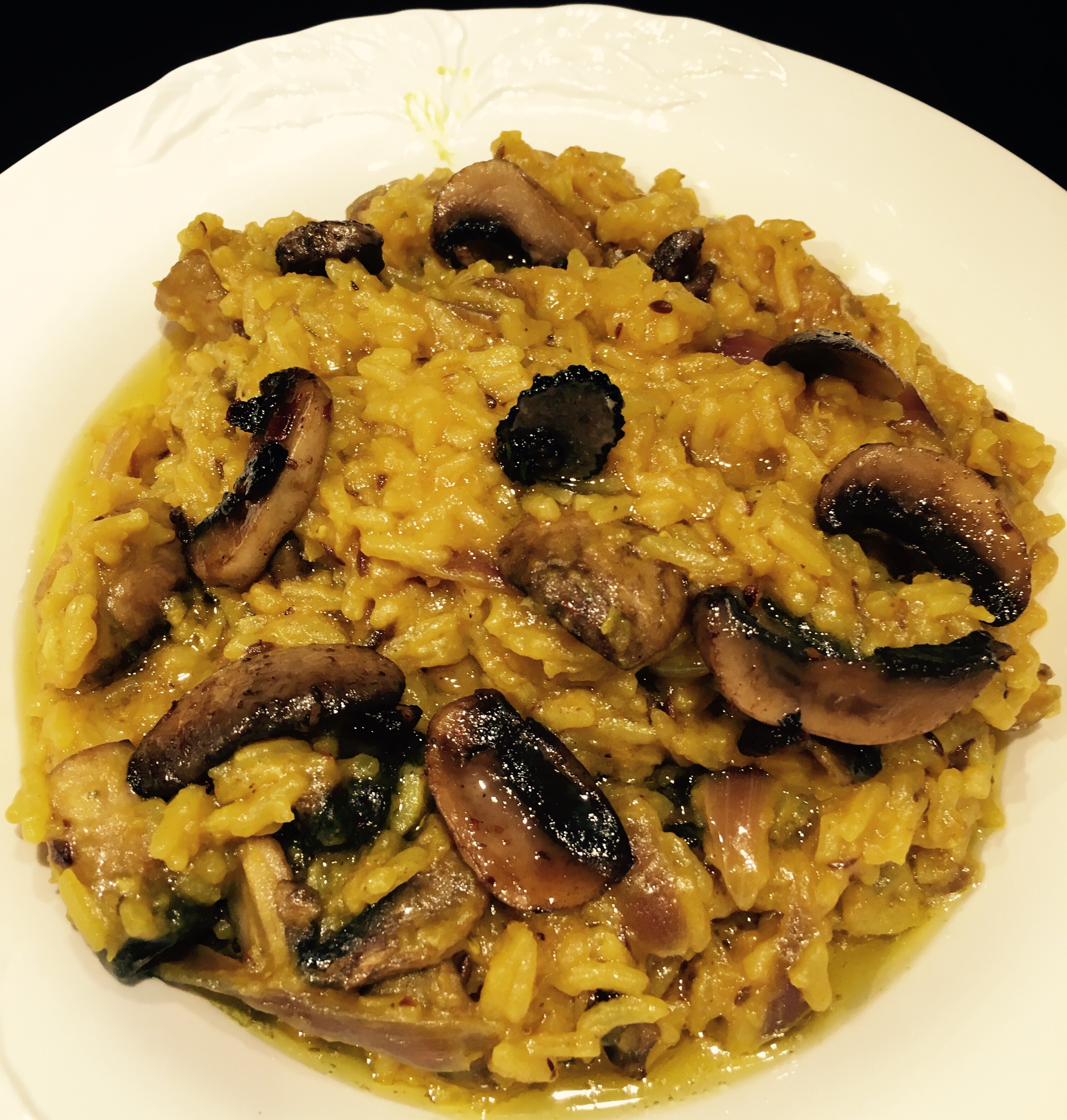
  I am currently on an Indian kick, so tonight it was a version of Kedgeree or it could be an Indian Risotto. The word kedgeree is an English variation on the Indian word Khichri, and it is supposed that the  colonial British brought the idea back from India, though there are records of it being in Britain, very much earlier than that. The traditional Britihs version usually contains smoked fish along with rice , hard boiled eggs, white fish and maybe shrimp or prawns. 

This version is made with lentils and rice with mushrooms.

For three people

  1. 100 grams yello or red lentils ( pigeon leas , toor dal,)
  2. 350 grams basmati rice
  3. 2+2 tabsp ghee or olive oil 
  4. 1 tsp cumin seeds toasted
  5. 1 onion sliced
  6. 3 cloves garlic, chopped
  7. 1tsp turmeric
  8. 750 mls  vegetable stock
  9. Salt to taste.

For the mushrooms

  1. 500 grams mushroom sliced not washed but cleaned with a mushroom brush.
  2. 4 tbs olive oil 
  3. 4 cloves garlic chopped 
  4. 1 tsp chilli flakes

Melt 2 tabsp ghee, add the cumin and toast/fry until it pops, add the garlic and the onion , sauté until soft but not brown. Stir in the lentils and the rice. Add the stock, turmeric and salt. Bring to the boil, cover and simmer for about half an hour. Add more stock or water to keep it to a risotto consistency. When cooked switch off the heat and keep covered to keep hot.

Whilst the risotto is cooking heat the oil and add  the garlic, sauté until soft but not brown. Add the sliced mushrooms and the chilli flakes and stir until the all of the liquid generated by the mushrooms have been absorbed.. Add all to the rice/lentil mixture saving a few for garnish. Melt the remaining ghee. Plate the risotto and pour over some of the melted ghee and garnish with the remains mushrooms. 


Breakfast in London

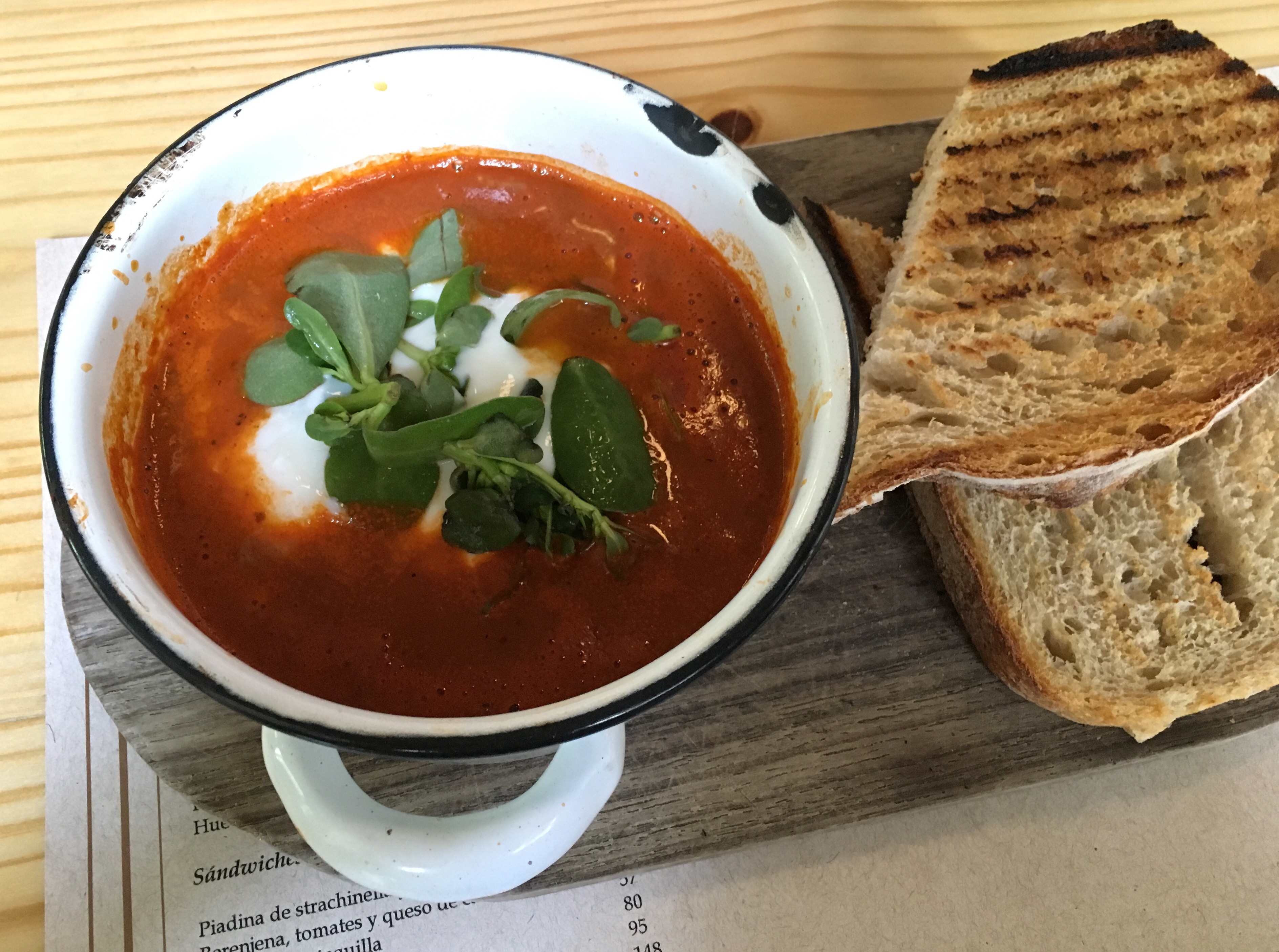
On returning to London from Mexico City it was to a cupboard bare. So after a trip to the local supermarket followed by another trip to Church St. market, I thought I would treat himself to a Mexican treat for Sunday breakfast. So it was going to be Poched eggs with a chilli tomato sauce. As mentioned in my previous blog I created a recipe for this Mexican delight. However I added some extras, which included some sauteed chopped red peppers, mixed in with the canned tomatoes mixture and whizzed to a fine purée . The was heated and if it was too thick I diluted it with some water.

Instead of coriander, this time I used water cress ( which actually was perfect) . Again a soft poached egg ( or two) and some toasted sourdough bread.

Unfortunately , I do not have the chipped enamel bowls in which to serve the breakfast, maybe on my next trip to Mexico, I will be able to hunt done the bowls. Meanwhile, I served it in some old Japanese bowls. 


Breakfast in Mexico City

Breakfast in Mexico City is an interesting affair. It ranges from the street stalls that cater to the itinerate workers, who come into the city in their droves, often leaving their homes long before dawn to ride one of the many, rickety buses, down the crowded freeways to work. There are food stalls on every street corner, but none more so than the areas around the bus stations.So from Street Stalls to high end Hotels Breakfast can last the whole morning.

In the area known as Colonia Condesa there is an abundance of good middle of the road eating establishments. One of the new ones is Lardo and is open for breakfast, lunch and dinner, and I have been there morning and night and not been disappointed.

On my last visit the slender blonde said that one of her favourite breakfasts was “Huevo pochados pimientos,epazote y verdolagas” so translated poached eggs with tomato pimento sauce, Mexican herbs and purslane. Epazote is an ancient Mexican herb with a distinctive flavour and used widely in Mexico and Central America , it is sometimes called Mexican Tea.  Purslane on the other hand originates in Central Asia, but has spread world wide. It grows just about everywhere, but I am not sure I have ever seen it growing, or if I did, I didn’t have a clue as to what it was. Many gardeners consider it a weed and a nuisance, as it goes to seed very quickly. But it is apparently rich in Omega 3, so maybe not so bad after all.

However, both of these ingredients are not readily available in the local grocery store, so I have come up with alternatives.For Epazote I have substituted some coriander and for the Purslane a few sprigs of watercress .

To make this sauce yourself, could take a little time and dedication, however there is a cheats version.

For two people take a can of chopped tomatoes with chillies, a large white onion chopped, a couple of chillies de seeded and chopped and a few sprigs of coriander. Sauté the onion and chillies together until soft, add the can of tomatoes and Wizz altogether to make a smooth sauce. Taste and adjust the seasoning. 

My method of making poached eggs is simplicity itself. Boil some water in a pan with a dash of lemon juice, add the required number of eggs, carefully cracked , bring back to the boil, turn off the heat and leave for the whites to solidify. Remove from the pan with a slotted spoon. If you like your yolks firmer then leave in the hot water for a while longer.

Heat the tomato sauce, pour into bowls add the newly poached eggs, top with a little sour cream and a sprig or two of watercress for garnish. Serve hot with freshly toasted sourdough bread!