

Once of the advantages of having a home in the Mountains ( ours is in the Haute Savoie, not so far from Mont Blanc) is the amazing Savoyard food, the cheeses, the ham, the charcuterie, the cream, the potatoes and oh yes more cream and butter! On the other hand, the disadvantages are also huge, the cheeses, the ham, the charcuterie, the cream, the potatoes and yes more cream and butter! What makes the food wonderful is also its deterrent. Morzine/Les Gets both on the Route des Grandes Alps, have their fair share of local restaurants but nearly all of them specialise in the local food which is labeled Savoyard. Hence, going out to eat usually means eating the local fare. To be fair, they, the restaurants are not catering to the likes of me, on the whole they cater to the tourists, the skiers in winter, the hikers and mountain bikers in the summer. Consequently, when we are in the mountains, we don’t eat out very much.
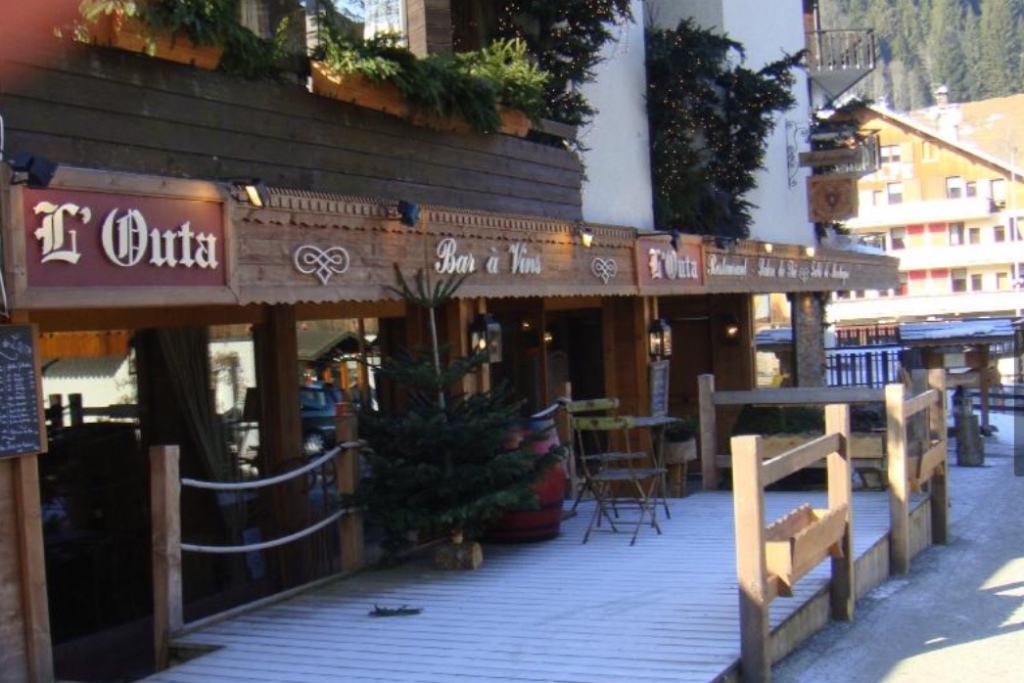
Having said that, in Les Gets, there is a good restaurant, called L’Outa, which on first sight one can be forgiven in thinking that it is a rather nice antique shop. Madame who runs this establishment with her husband is fun! We telephoned one day to make a reservation and we’re told to call in the morning as she hadn’t decided if she was going to be open or not! Another time she complemented a French friend on her excellent French ! And her food is not the local fare! Another, supposedly up market restaurant, we visited one Christmas. The waitress declared that the chef had been shucking oysters all day! We couldn’t resist! We got 2 each ! And the rest of the meal, although not Savoyard, was less memorable!
In our little hamlet, we too have one, just one bar/ café. Over the years, it has become smarter and better food, in fact her hamburgers are really good as is her Steak tartare. Of course there are Savoyard items on the menu, but not exclusively so.
So what are the specialities of the region.
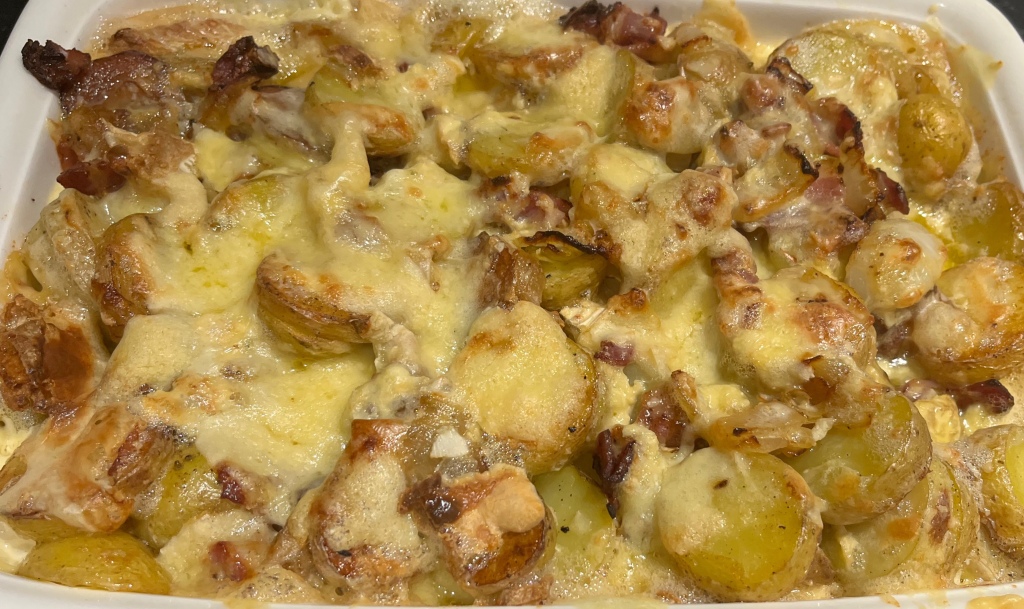
- Tartiflette which is made from Potatoes, Reblochon cheese, bacon or ham, onions , butter and cream.
- Farce or Farcement Savoyard, is a cake made from Potatoes, cream and bacon, NO cheese, but of course it could be added as well.
- Croziflette, which is a bit like Tartiflette but made with the little local pasta
- Diots are the local sausages
- Raclette, which is melted cheese and usually served with local charcuterie
- Croute Savoyarde is the areas answer to Cheese on toast or Croque Monsieur or Croque Madame
- French onion soup, not necessarily from this region except, the soup is topped with toasted bread smothered in one of the local cheeses
- Tarte d’Abondance. This really is my favourite, it is a cheese tart.
- There are 8 cheese from this region and all have a PDO, which means they have a Protected Designation of Origin. They are Abondance, Beaufort, Chevrotin, Emmental, Raclette, Reblochon, Tome and Tomme. They are all made from one of two types of cow, Abondance and Tarentaise.
A visit to any of the local markets will give you a good overview of all the cheeses and charcuterie available throughout the region.

For some reason the other day, I decided to make Tartiflette. It is a firm favourite for Himself and also for his skiing buddy who comes every January.
To make enough for 4/6 people :-
- 1.5 kilos of potatoes scrubbed but they don’t need peeling
- 3-4 oz unsalted butter
- 8 oz bacon cut into chunks or lardons, smoked or not
- 2 white onions roughly chopped
- At least 4 cloves garlic mushed
- About 12 oz Reblochon Cheese. I actually didn’t have any Reblochon tucked away in the freezer, so I used what I had, a combination of Pont l’eveque , Tunworth ( an English Camembert type) Emmental . Not traditional, I know but it worked.
- 100 cl of creme fraich or cream
- Salt and pepper.
Simply boil the potatoes until soft, I as usual cook them in the microwave. When cool, slice them into rounds about 1/4” thick.
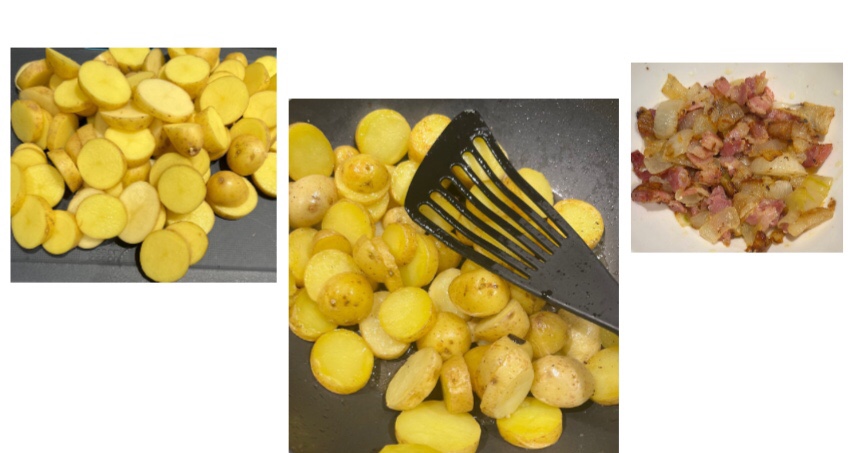
Melt the butter and sauté the potatoes , until a golden colour, put to one side and then sauté the lardons, until they are crispy, add the onions and garlic and again sauté, but don’t let the onions brown, just get them soft.
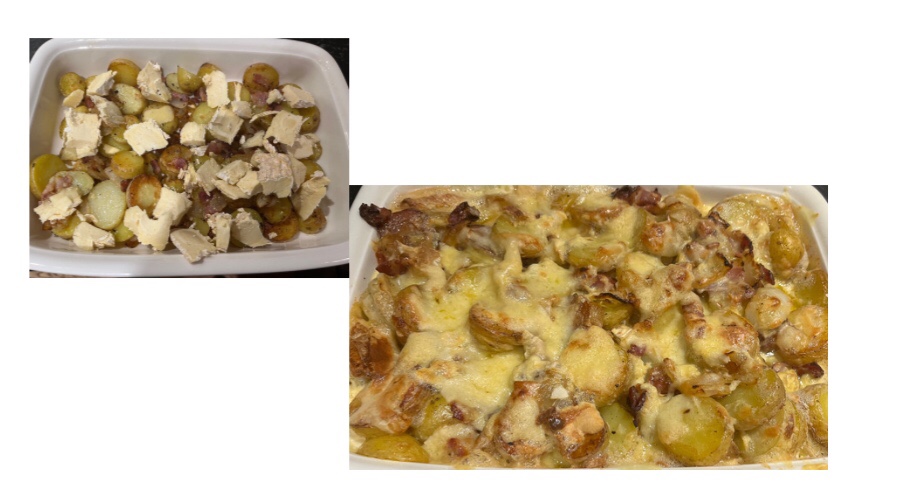
Layer the potatoes, lardons/ onion/garlic in an ovenproof rectangular casserole ( in France one can buy special dishes for Tartiflette) along with some of the cheese.
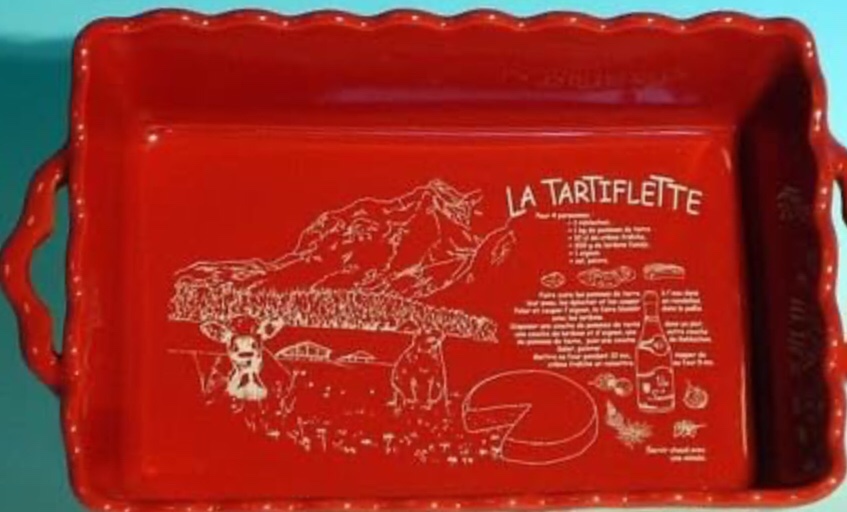
Pour the cream over the mixture and top with the remaining cheese.
Bake at 180 C ( fan) 425/ Gas 7 for about 15 minutes, it should be bubbling. Serve at once along with maybe a green salad.
Left overs? I’m kidding, but if there are, refrigerate or freeze. Reheat very quickly in a microwave.
Enjoy ! We certainly did !


 oystersandchampagne